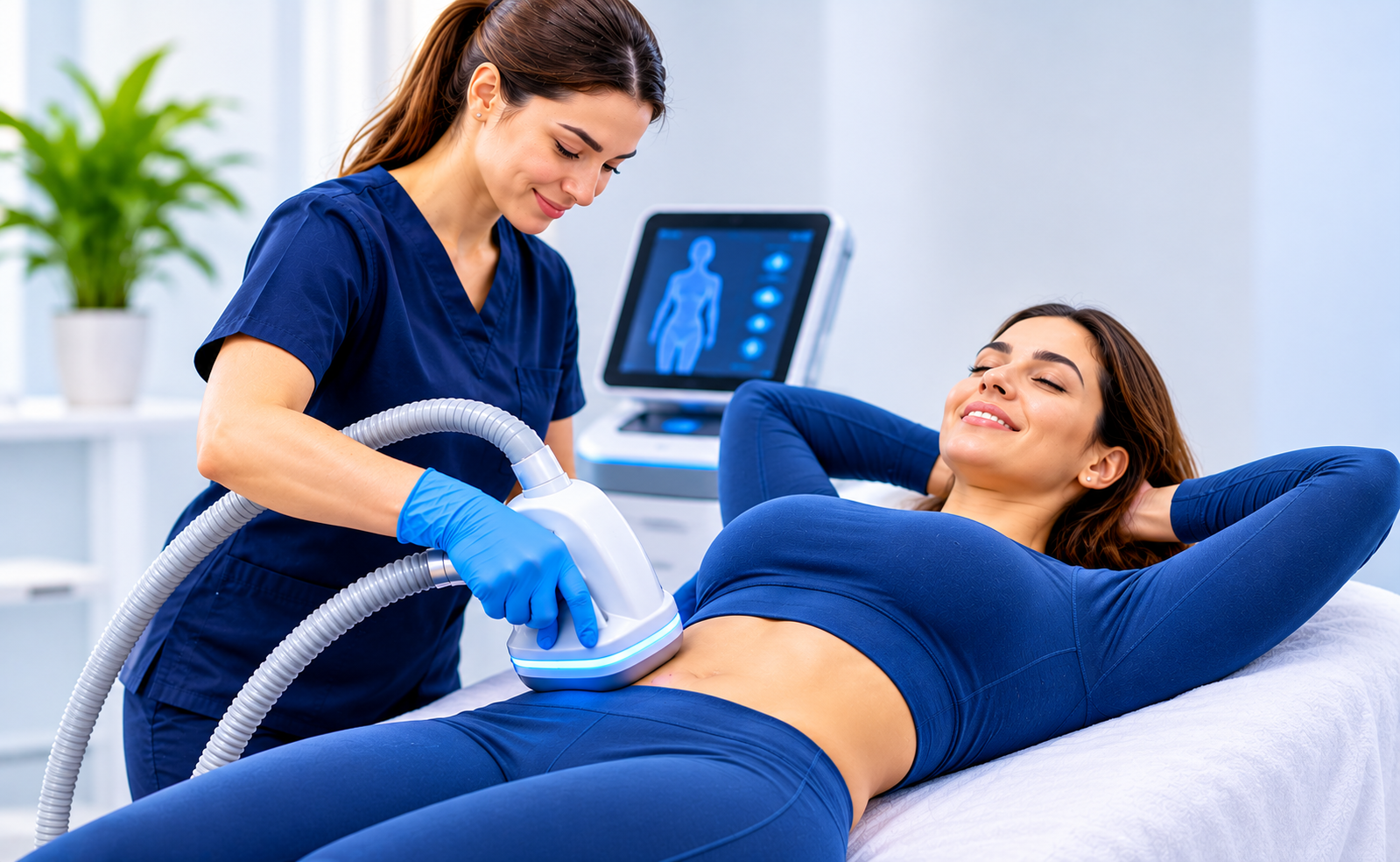
For many people, achieving their ideal body shape involves more than simply losing weight. Even with regular exercise and a balanced diet, certain areas of fat can remain stubbornly resistant to change. This is where body sculpting treatments have become an increasingly popular option for people wanting to refine their silhouette without undergoing traditional cosmetic surgery.
From reducing abdominal fat and improving the appearance of love handles to targeting smaller areas such as the upper arms and underarms, modern body sculpting technologies offer a range of possibilities.
But what exactly is body sculpting, how does it work, and what are the potential benefits?
Understanding the different treatments available can help people decide whether non-surgical body contouring might be suitable for their individual goals.
What is body sculpting?
Body sculpting, also known as body contouring, is a broad term used to describe treatments designed to change the shape or appearance of specific areas of the body.
Some treatments focus on reducing localised fatty deposits, while others aim to improve skin firmness or stimulate underlying muscles.
Unlike conventional weight loss, which reduces overall body mass, body sculpting is generally intended to address particular areas that remain a concern after someone has reached a relatively stable weight.
There are both surgical and non-surgical approaches. Liposuction is a well-known surgical option, while non-invasive technologies include fat freezing, certain ultrasound treatments, radiofrequency and electromagnetic muscle stimulation.
Each works differently, meaning the most suitable approach depends on whether the concern involves unwanted fat, loose skin or muscle definition.
People exploring body sculpting treatments should understand these distinctions before deciding which technology best matches their expectations.
How do non-surgical body sculpting treatments work?
Non-surgical body sculpting uses specialised equipment to affect targeted tissues without making surgical incisions.
Fat freezing, for example, uses controlled cooling to damage selected fat cells beneath the skin. Over the following weeks and months, the body gradually clears the affected cells, potentially reducing the thickness of the treated fatty layer.
Certain ultrasound technologies use sound wave energy to disrupt fatty tissue, although effectiveness varies depending on the device and treatment protocol.
Radiofrequency treatments use controlled heating and may encourage collagen remodelling, making them relevant to people experiencing mild skin laxity.
Electromagnetic muscle stimulation devices work differently again, generating repeated muscle contractions that may improve muscle tone in selected areas.
Although these treatments are often grouped under the same body sculpting label, their results and limitations are not interchangeable.
The benefit of targeting stubborn fatty deposits
One of the biggest attractions of body sculpting is the ability to focus on specific areas rather than attempting to lose more weight overall.
Fat distribution is influenced by genetics, hormones, age and individual body composition.
This means someone may have a relatively slim waist but retain fatty deposits around their thighs, or develop strong abdominal muscles while still having a small pocket of lower stomach fat.
Targeted body contouring can sometimes help address these areas without requiring further overall weight reduction.
However, the improvements are generally modest compared with surgery, and not every fatty deposit is suitable for treatment.
The stomach remains one of the most popular areas
The abdomen is among the most frequently requested areas for body sculpting.
Many people struggle with lower stomach fullness, even after making significant improvements to their fitness and nutrition.
Pregnancy, weight fluctuations and natural ageing can also change the appearance of the abdominal area.
For suitable individuals, non-surgical fat reduction may help reduce localised subcutaneous fat and create a smoother abdominal contour.
However, these treatments cannot remove deeper visceral fat surrounding internal organs.
It is also important to distinguish between abdominal fat and loose skin, as reducing fat does not necessarily improve skin firmness.
Some people may benefit more from treatments that focus on mild skin laxity, while substantial hanging skin may require surgical assessment.
Sculpting the arms and thighs
The upper arms and thighs are other common areas where people seek body contouring treatments.
Fat around the upper arms can sometimes remain despite regular exercise, particularly when genetics influence where the body stores fatty tissue.
Similarly, the inner and outer thighs may retain localised deposits that affect the overall silhouette.
Non-surgical treatments can potentially reduce suitable pockets of fat, although the amount of improvement depends on the individual and the technology used.
For people experiencing loose skin following substantial weight loss, fat reduction alone may not produce the desired outcome.
Strength training can also play an important role in developing muscle definition around the arms and legs, complementing overall weight management.
Can body sculpting target very small areas?
One particularly interesting development in body contouring is the ability to assess smaller, more precisely defined areas of unwanted fat.
While the stomach, thighs and arms remain the most familiar treatment areas, some people are concerned about fatty deposits in less commonly discussed locations.
These may include the underarms, bra-line area, beneath the chin and the fatty tissue over the pubic bone.
The ability to consider these specific areas is one reason body sculpting appeals to individuals who are already close to their preferred body weight.
However, not every body sculpting device is suitable for every location. Applicator size, tissue thickness, anatomy and safety considerations all influence whether treatment is appropriate.
Understanding fat around the mons pubis
The mons pubis is the rounded area of fatty tissue located over the pubic bone.
Its appearance varies naturally between individuals, and having fat in this area is completely normal.
However, some people notice that the area remains relatively prominent after weight loss or becomes more noticeable in fitted clothing.
Genetics, body fat distribution and changes following pregnancy or weight fluctuations can all influence its appearance.
People researching mons pubis fat reduction may be interested in whether targeted body contouring could improve this particular area.
Because the mons pubis is anatomically sensitive and close to important structures, treatment suitability requires careful professional assessment.
Not all fat reduction devices are designed or authorised for use in this location, and non-surgical treatment should never be assumed appropriate without checking the equipment’s intended use and safety requirements.
What about stubborn armpit fat?
Another area that can affect body confidence is the soft tissue around the underarms.
Some people notice small bulges near the sides of their chest, particularly when wearing sleeveless clothing or fitted tops.
These areas may contain subcutaneous fat, but their appearance can also be influenced by normal anatomy, skin folds or accessory breast tissue.
This distinction is important because not every underarm bulge is simply unwanted fat.
For people investigating how to get rid of armpit fat, the first step is understanding what is causing the fullness.
Where the concern involves a suitable fatty deposit, a practitioner may be able to discuss appropriate contouring options.
However, unexplained lumps, painful swelling or changes in the underarm area should be assessed by a healthcare professional rather than treated cosmetically.
Can body sculpting improve confidence?
For some people, small areas of stubborn fat can become a persistent source of dissatisfaction, even when they are otherwise happy with their weight and fitness.
Being able to address a specific concern may help individuals feel more comfortable in certain clothes or more satisfied with their body proportions.
However, cosmetic treatment cannot guarantee improved confidence or emotional wellbeing.
Realistic expectations are particularly important because non-surgical body contouring usually produces gradual, relatively subtle changes.
The aim should be to enhance existing body contours rather than pursue an unrealistic standard of physical perfection.
Is body sculpting a good alternative to liposuction?
One of the main benefits of non-surgical body sculpting is that it generally avoids the incisions, anaesthesia and recovery associated with surgical fat removal.
Many people can return to their normal activities relatively quickly after treatment.
However, non-invasive procedures generally remove less fat than liposuction and may require multiple appointments.
Results can also take several weeks or months to become noticeable.
Potential side effects depend on the technology used and may include swelling, bruising, discomfort, numbness or skin irritation.
Fat freezing also carries a rare risk of paradoxical adipose hyperplasia, where treated fatty tissue enlarges instead of shrinking.
Non-surgical body sculpting should therefore be viewed as an alternative for selected concerns, not a direct replacement for every surgical procedure.
How long do body sculpting results last?
The duration of results depends on the treatment and the individual’s lifestyle.
Treatments that successfully destroy fat cells can produce long-lasting changes within the targeted area.
However, remaining fat cells can still expand if someone gains weight.
This means that body sculpting does not prevent future weight gain or eliminate the need for healthy habits.
Maintaining a stable weight, eating a balanced diet and remaining physically active can help preserve improvements in body shape.
It is also worth remembering that natural ageing and changes in skin elasticity can influence body contours over time.
Who is a suitable candidate for body sculpting?
Non-surgical body sculpting is generally most relevant to people who are close to a stable, healthy weight and want to address particular areas of unwanted fat or mild skin laxity.
It is not intended as a treatment for obesity or a substitute for medically supervised weight management.
Suitability depends on the treatment area, medical history, skin condition, amount of fatty tissue and the specific equipment being considered.
A professional consultation should include a discussion of potential complications, expected results and whether the proposed treatment is appropriate.
People with significant loose skin, certain medical conditions or concerns involving sensitive anatomical areas may need a different approach.
The future of personalised body contouring
Body sculpting has expanded the options available to people who want to refine their shape without immediately considering surgery.
While traditional treatment areas such as the stomach, arms, thighs and love handles remain popular, interest in smaller and more specific fatty deposits highlights the increasingly personalised nature of cosmetic body contouring.
The greatest benefit is not necessarily achieving dramatic transformation. For suitable individuals, it is the possibility of making modest, targeted improvements to areas that have remained resistant to conventional weight loss.
Whether the concern involves abdominal fullness, thigh contours or a small pocket of fat in a less commonly discussed area, understanding the underlying anatomy and selecting an appropriate treatment are essential.
With realistic expectations, qualified professional guidance and a commitment to maintaining a stable weight, body sculpting can be one option for refining body proportions and feeling more comfortable with your appearance.
