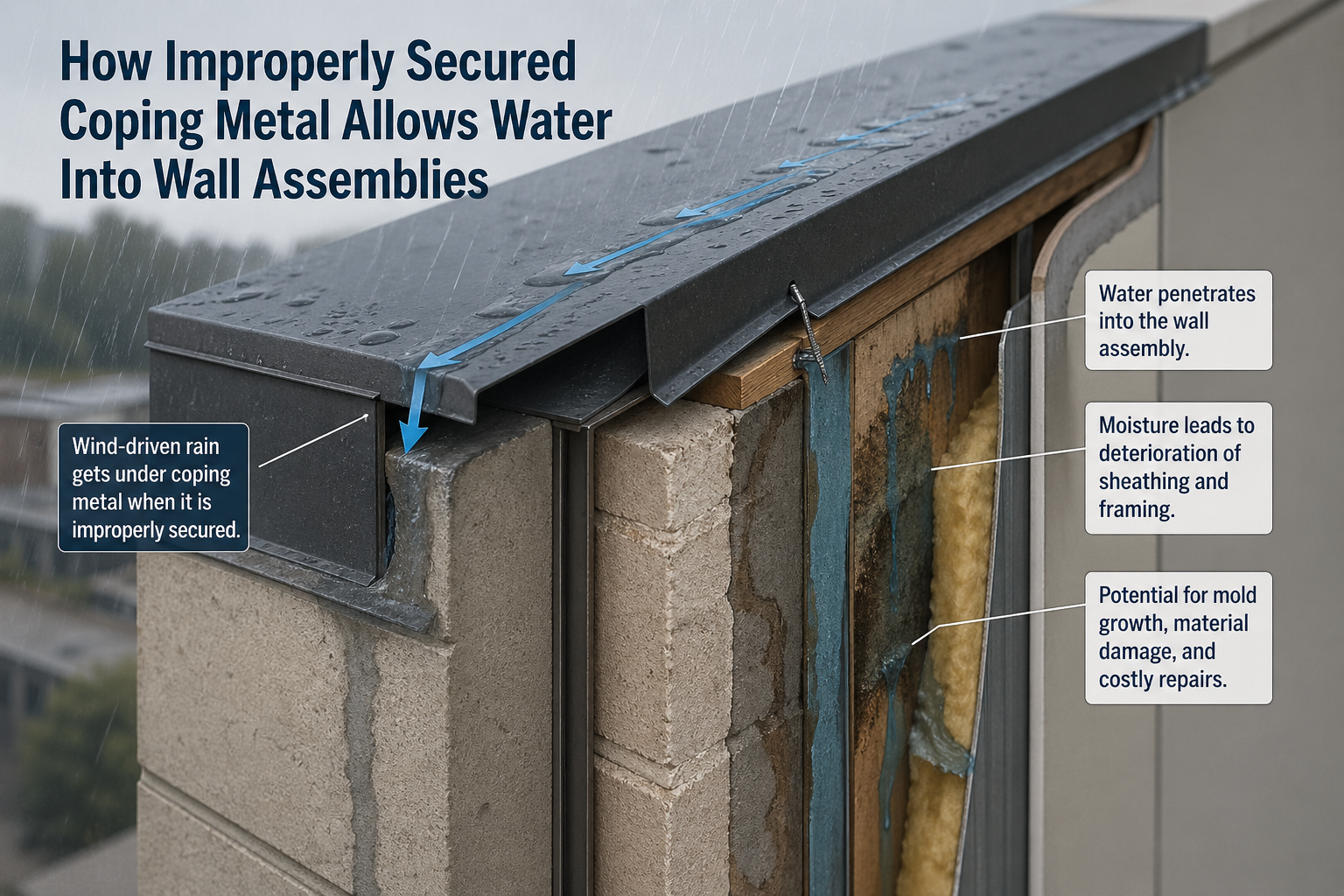
When you look up at the top of a commercial building or a residential parapet wall, you see a sleek metal cap covering the very edge of the roof. That metal is called coping. While it looks like a simple decorative trim, it is actually the first line of defense for the entire vertical structure of the building. Most building owners do not think twice about it until they see brown stains on their interior drywall or crumbling masonry outside. If you are dealing with leaks near the roofline, finding a reliable roof repair sandy contractor can help you identify if the metal is the culprit before the damage gets out of hand. Coping is supposed to shed water away from the wall, but when it is loose or poorly installed, it acts more like a funnel than a shield.
The Role of the Drip Edge and Pitch
The main job of coping metal is to keep the top of the wall dry. To do this, the metal should be pitched inward toward the roof surface so that rainwater flows onto the membrane and down the drains. It also needs a proper drip edge, which is the little flared lip that sticks out past the face of the wall.
When water runs off the metal, that drip edge ensures the droplets fall straight to the ground rather than hugging the side of the building. If the metal is flat or, even worse, pitched outward, water will pool on top or constantly soak the brickwork. Over time, this moisture works its way into the mortar joints. Once the water gets behind the surface, the wall assembly starts to hold onto that humidity, leading to rot and structural decay.
Thermal Expansion and Loose Fasteners
Metal is a material that moves. It expands when the sun beats down on it and contracts when the temperature drops at night. This constant movement is a silent killer for poorly secured coping. If a contractor just nails the metal down through the top, those holes will eventually widen as the metal shifts.
Once those fastener holes become elongated, they are no longer watertight. Rain sits on the flat top of the coping and leaks directly through the screw holes into the wooden plate or the masonry underneath. Proper installation usually involves using continuous cleats. A cleat is a hidden strip of metal that hooks onto the coping and holds it down without requiring exposed nails on the top surface. Without this, the wind can also get under the metal and rattle it until the seals break entirely.
The Failure of Sealants and Joints
No matter how long a run of wall is, the metal coping will eventually have a seam. This is where two pieces of metal meet. In many cheap installations, these joints are simply overlapped and filled with a thick bead of caulk. This is a recipe for disaster. Caulk is a temporary fix that dries out, cracks, and peels away under intense UV rays.
When the sealant fails at the joint, water travels right through the gap. Because this happens at the very top of the wall, the water has nowhere to go but down into the wall cavity. It can travel several feet away from the original leak site, making it incredibly difficult to find the source of the problem later. High-quality systems use standing seams or internal splice plates that channel water back out to the roof even if the primary seal fails.
Capillary Action and Trapped Moisture
Water has a sneaky way of traveling upward or sideways through tight spaces, a process known as capillary action. If the coping metal is sitting flush against the wall without a proper air gap or a secondary waterproofing membrane underneath, moisture gets sucked into the space between the metal and the wall.
Once moisture is trapped there, it cannot evaporate. This creates a “dark and damp” environment that is perfect for mold growth and wood rot. In many cases, the damage is hidden behind the metal for years. By the time a leak shows up on the ceiling inside, the wooden blocking that holds the roof together might already be soft and useless. This is why the layers underneath the metal, such as a high-temperature ice and water shield, are just as important as the metal itself.
Final Word
Ignoring the metalwork on top of your building is a gamble that rarely pays off. Most people focus on the shingles or the flat membrane. Many fail to realize that the perimeter is often where the real trouble starts. If your coping is rattling in the wind or showing signs of rust and gaped seams, you need to act fast. Reaching out to a professional roof repair sandy contractor is the best way to ensure your wall assemblies stay dry and your structural integrity remains intact. A small fix today prevents a massive reconstruction project tomorrow.
