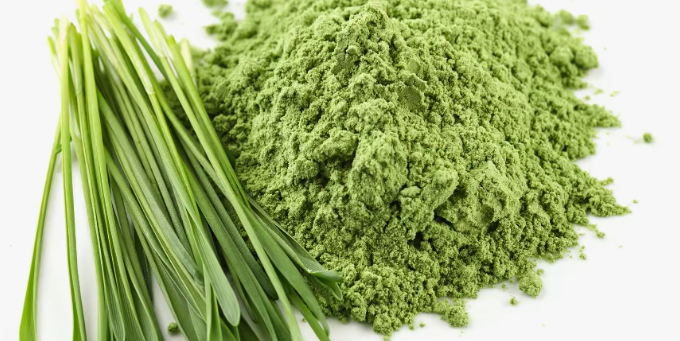
Barley grass powder has become one of the most searched green superfoods in India’s wellness space over the last few years, often confused with barley flour or roasted barley (sattu). The two aren’t interchangeable, and knowing the difference is the first step to using barley grass powder correctly and choosing a genuinely good one.
What Is Organic Barley Grass Powder?
Organic Barley grass powder is prepared from the young tender leaves of the barley plant weeks before grain is likely to be available. It’s not the flour from barley or sattu, which is made from the mature grain. The plant stage at the leaf stage is when it is most nutritive, with high levels of chlorophyll, enzymes and antioxidants that the grain doesn’t contain in the same amounts.
There are a couple of characteristics that makes a high quality barley grass powder different from a mediocre one:
- The nutrient profile of the leaves is dense if barley is grown in mineral-rich soil, and mineral rich soil is usually found in the foothill regions of the Himalayas in India, and other such areas in the country.
- Freeze-dried or low-temperature spray-dried powders have much more chlorophyll and enzyme activity than heat dried powders, because these components are rapidly lost upon heating.
- Purity of the finished product, no artificial colour, emulsifiers or fillers – the barley grass powder is typically used every day and not occasionally.
The nutrient claims in the research are generally supported with the nutrient activity of barley leaf extracts found to be nearly twice that of wheat leaf extracts and a significantly higher amount of chlorophyll content than wheatgrass or rice grass. The review published in 2018 in Oxidative Medicine and Cellular Longevity further highlighted the blood sugar regulation, liver function, immunity, and gut health supporting properties of barley grass which is attributed to its compounds such as GABA, flavonoids, saponarin, and vitamins A, B1, C, and E.
The Different Ways to Use Barley Grass Powder and Why Each One Works
Barley grass powder is not used in one recipe. The “why” of each usage is frequently based on how the nutrients react and the use is determined by what you are trying to achieve from it.
- The old fashion approach is still the best for digestion. The most traditional method of supplementing is to mix a teaspoon of barley grass powder in a glass of warm water (eight ounces) on an empty stomach, first thing in the morning. Fibre and enzymes aid regularity and giving it before meals ensures there’s no food to compete for absorption. If you’re trying out barley grass powder for digestion for the first time, then this is the easiest entry point.
- Smoothies mask well for detox and skin. Add one teaspoon of the barley grass powder to a cup of water and coconut water along with a cucumber, a small piece of ginger and lemon juice. The powder’s mild bitterness is pretty much eliminated, and its chlorophyll content is said to help the body’s natural detox processes; hence the rosier complexion that is often noticed a few weeks in, and not immediately.
- Combine with fruit for long-lasting energy without caffeine. Bidding a green fire to the banana, a handful of soaked almonds, followed by barley grass powder and a dollop of milk (or almond milk) is a more sustained option than coffee. This is a great exchange for those with anxiety and/or sleep trouble as it is also found to enhance sleep quality in previous studies.
- However, consistency is more important than format for metabolic health. The one area where barley grass powder has real clinical backing is a 2010 study which has shown that the powder can be beneficial to diabetic dyslipidaemia, and there is also a study carried out on smokers with high blood cholesterol that has shown a meaningful reduction in plasma cholesterol after just four weeks of taking the powder, every day . What really matters is that it is consumed regularly, not from time to time, whether it’s in water, smoothie or in dal.
- When it comes to immunity, let it melt into savoury food. Barley grass powder is not as pungent as it sounds when used in dal, buttermilk (chaas) etc. even in a dosa batter, it does not sound as pungent as it does in sweet preparations. A great way to establish a habit without creating an extra task!
How to Choose a Good Barley Grass Powder
The variety of brands of organic barley grass powder available online in India is more than the people can imagine and quality doesn’t even come close to matching their expectations since this is a powder that they take every day of their lives. Before purchase, there are several factors to consider:
- The place and conditions where plants are cultivated: The nutrient density of barley is more than most buyers realise to be dependent on where it is grown. Urbana Superfoods grows their barley grass in the foothills of the Himalayas and brands such as Herbal Hills and NeutraVed rely on certified-organic farming as a primary sourcing mantra.
- Processing method: Freeze-drying is much better at retaining chlorophyll and enzyme activity than heat drying. That’s where Urbana and Natures Velvet both see freeze-dried or low temperature processing as a differentiator as it impacts on the “aliveness” of the nutrients when they reach the jar.
- Additive-free formulation: Barley grass powder is determined to be used daily, so it is important that it has no fillers, emulsifiers or artificial colours. Both Urbana and Nutriorg promote themselves as such, no added sugar, no synthetic ingredients, just the leaf powder itself.
- When you take these three factors into account, origin, processing, and purity, most of the reputable Indian brands fall in the same range of quality; and it isn’t really about finding the “best barley grass powder” but rather the one that you can verify its source and processing.
Final Word
Barley grass powder is a bit of a gamble, you can’t do the same thing every time. The nutrient profile of that spoonful remains the same whether it’s mixed into a glass of water in the morning to aid digestion, or into a smoothie, or into dal at dinner to aid digestion. The most important aspect is consistency and the quality of the powder in the jar in the first place – because the chlorophyll and enzyme contents diminish quickly under poor sourcing or processing. Use whatever of the scenarios matches your real life routine, rather than the one that sounds like it’s the coolest use case; do what you feel you can do and expand from there.
