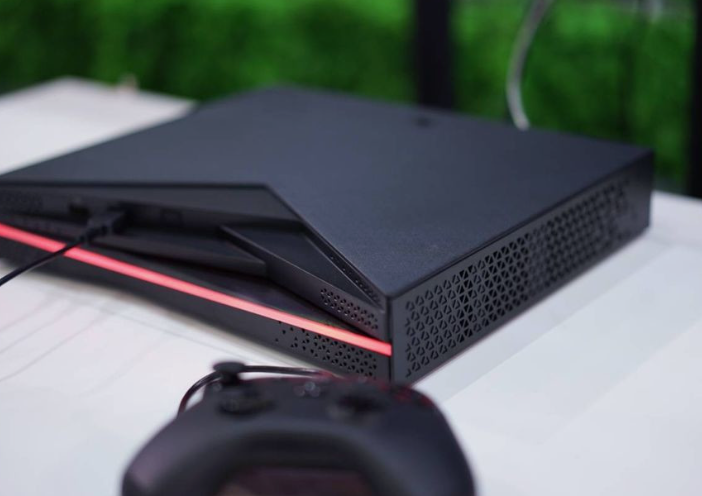
If you’ve ever wondered why some gaming consoles deliver stunning graphics, smooth gameplay, and lightning-fast loading times while others struggle with demanding games, the answer often comes down to one critical component: the System on a Chip (SoC). Understanding what is the best SoC for gaming consoles is is essential for gamers who want to know how modern consoles achieve their impressive performance.
A System on a Chip integrates multiple hardware components into a single processor, including the CPU, GPU, memory controller, AI accelerators, and other essential computing elements. Instead of relying on separate chips for each function, gaming consoles use highly optimized SoCs designed specifically to balance performance, power efficiency, and cost.
As gaming technology continues to evolve in 2026, SoCs have become more powerful than ever. They support advanced graphics technologies like ray tracing, AI-enhanced upscaling, faster storage, and immersive gaming experiences. This guide explains how gaming console SoCs work, compares the leading options, and explores what makes an SoC ideal for modern gaming.
What Is an SoC?
A System on a Chip, commonly known as an SoC, is a complete computing platform integrated into a single semiconductor chip. Unlike traditional desktop PCs that use separate processors, graphics cards, and controllers, an SoC combines all major processing components into one compact package.
Gaming consoles benefit significantly from this design because every component is engineered to work together efficiently. The CPU handles game logic and system operations, while the integrated GPU renders graphics. Additional hardware manages memory, storage access, audio processing, security, and networking.
This unified architecture reduces latency, improves power efficiency, lowers manufacturing costs, and enables developers to optimize games specifically for a single hardware configuration.
Why the SoC Is So Important in Gaming Consoles
The SoC serves as the brain of every modern gaming console. It determines frame rates, graphical quality, loading speeds, multitasking capabilities, and even how efficiently the console manages heat.
A well-designed SoC allows developers to maximize hardware utilization because every console has identical specifications. This consistency is one of the biggest reasons console games are often highly optimized compared to PC games with countless hardware combinations.
Modern SoCs also support advanced technologies such as hardware ray tracing, AI image reconstruction, variable rate shading, machine learning workloads, and ultra-fast SSD integration. These capabilities significantly improve visual quality while maintaining stable performance.
Key Features of a Great Gaming Console SoC
The best gaming console SoCs combine powerful CPU cores with highly capable graphics processors. Modern CPUs based on advanced architectures can process complex game physics, artificial intelligence, and open-world environments without slowing gameplay.
Equally important is the integrated GPU. Today’s gaming consoles rely on graphics processors capable of delivering realistic lighting, detailed textures, and high frame rates at resolutions ranging from 1080p to native 4K.
Memory bandwidth also plays a major role. Fast unified memory enables the CPU and GPU to access data quickly, reducing bottlenecks during gameplay.
Manufacturing technology further impacts performance. Chips built on smaller fabrication processes such as 6nm, 5nm, or newer technologies provide greater efficiency, lower temperatures, and improved overall performance.
Hardware support for ray tracing, AI acceleration, media encoding, and high-speed storage interfaces has become increasingly valuable as modern games demand more advanced features.
AMD Custom SoCs: The Industry Leader
When discussing what is the best SoC for gaming consoles, AMD currently dominates the market.
Both major home gaming consoles use custom AMD SoCs built around Zen CPU architecture and RDNA graphics technology. These custom processors combine excellent CPU performance with highly capable integrated graphics, allowing developers to create visually impressive games while maintaining stable frame rates.
AMD’s custom approach gives console manufacturers the flexibility to tailor every aspect of the chip for gaming. Features like hardware ray tracing, smart memory management, and optimized power delivery make AMD SoCs exceptionally well suited for long console life cycles.
The close integration between AMD’s CPU and GPU technologies also simplifies game optimization, helping developers extract every ounce of performance from the hardware.
Qualcomm Snapdragon and Mobile Gaming Consoles
Although AMD leads traditional home consoles, Qualcomm has become an important player in handheld gaming devices.
Snapdragon SoCs power several Android gaming handhelds and cloud gaming devices. These chips prioritize energy efficiency while offering impressive graphics capabilities for portable gaming.
Modern Snapdragon processors include advanced AI engines, efficient CPUs, capable GPUs, and strong wireless connectivity. Their excellent battery life makes them ideal for portable consoles, although they generally cannot match the raw graphics performance of larger home console SoCs.
For gamers who primarily enjoy cloud gaming or Android titles, Snapdragon remains one of the strongest mobile gaming platforms available.
Apple Silicon and Gaming Potential
Apple’s M-series chips have demonstrated exceptional graphics and computing performance in laptops and tablets. Although Apple does not currently produce a dedicated gaming console, its SoCs showcase what highly integrated chip design can achieve.
Apple Silicon combines powerful CPU cores, integrated graphics, neural processing units, and unified memory architecture into an extremely efficient platform. Modern Apple chips can run demanding games while consuming surprisingly little power.
If Apple ever enters the dedicated console market, its SoC technology could become a serious competitor thanks to its remarkable performance-per-watt ratio.
How Console Manufacturers Customize Their SoCs
Unlike off-the-shelf PC processors, gaming console SoCs are extensively customized.
Manufacturers work closely with semiconductor companies to modify CPU frequencies, GPU compute units, memory controllers, cache structures, security systems, and storage interfaces according to the needs of each console generation.
These customizations allow developers to target fixed hardware throughout the console’s lifespan, resulting in games that become increasingly optimized over time. Even years after launch, developers continue discovering new techniques that extract better performance from the same hardware.
This level of optimization is one of the biggest advantages consoles have over traditional PCs.
The Future of Gaming Console SoCs
The future of gaming console SoCs looks extremely promising. Semiconductor manufacturers continue shrinking fabrication processes while increasing transistor density and improving energy efficiency.
Next-generation SoCs are expected to deliver even stronger AI capabilities, more advanced ray tracing hardware, faster memory systems, and significantly improved graphics performance.
Machine learning will likely play a larger role in gaming through AI-assisted rendering, intelligent upscaling, realistic NPC behavior, and adaptive graphics optimization.
Cloud gaming integration may also influence future SoC designs by combining local processing with remote computing resources to deliver higher-quality experiences without dramatically increasing hardware costs.
As technologies mature, gamers can expect more immersive worlds, shorter loading times, and increasingly realistic visuals.
Factors to Consider When Evaluating a Gaming SoC
Choosing the best gaming SoC depends on the intended platform. Home consoles prioritize maximum graphics performance and long-term optimization, while handheld systems focus more on battery life and portability.
CPU architecture, GPU capability, manufacturing process, memory bandwidth, storage performance, AI acceleration, and thermal efficiency all contribute to overall gaming performance.
A balanced design often outperforms hardware that emphasizes only one component. This is why custom console SoCs frequently deliver smoother gaming experiences than general-purpose processors with similar specifications.
Developers also value software tools, driver stability, and optimization support when creating games for a particular platform.
Conclusion
So, what is the best SoC for gaming consoles? For modern home gaming systems, custom AMD SoCs remain the clear industry leader thanks to their outstanding balance of CPU power, GPU performance, hardware ray tracing, unified memory architecture, and developer-friendly optimization. These processors power today’s most advanced consoles and continue setting the benchmark for console gaming.
For portable gaming devices, Qualcomm Snapdragon SoCs offer excellent efficiency, strong graphics capabilities, and impressive battery life, making them an excellent choice for handheld experiences. Apple Silicon also demonstrates tremendous potential, although it has yet to appear in a dedicated gaming console.
Ultimately, the best gaming console SoC is one that successfully balances raw performance, energy efficiency, cost, and long-term optimization. As semiconductor technology continues advancing, future gaming consoles will deliver even more realistic graphics, faster gameplay, and immersive experiences powered by increasingly sophisticated SoCs.
