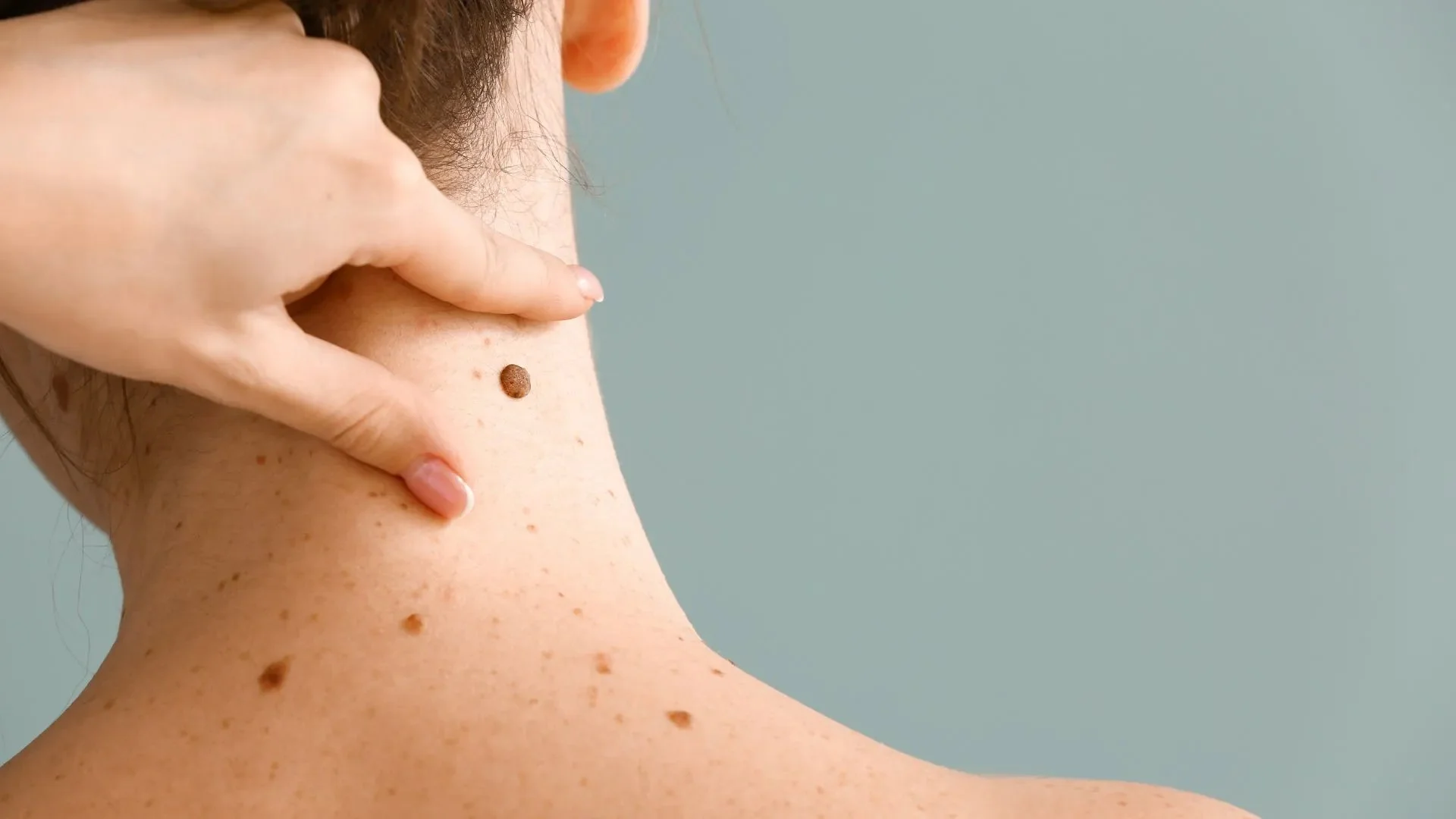
Let’s play a quick game. Look in the mirror. Or, think about your own skin. Can you see a small, dark spot? Maybe you have one on your cheek, your shoulder, or your arm. Now, what do you call it? Do you proudly call it your “beauty mark”? Or do you just think of it as a plain old mole?
It’s a question that has probably crossed your mind. We see them on celebrities—Cindy Crawford’s famous spot above her lip, Marilyn Monroe’s on her cheek. They’re celebrated as charming, unique features. But then, we also hear serious warnings from doctors about checking our “moles” for signs of skin cancer.
Also Read: The Ultimate MCo Beauty Starter Guide
So, what is the truth? Is a beauty mark just a pretty name for a mole? Or is there a real, medical difference that we all need to understand for our health’s sake?
As a writer who has spoken to many skin experts, I can tell you the answer is fascinating. It involves a bit of history, a lot of perception, and some crucial medical facts. Let’s clear up the confusion once and for all, with simple, straightforward language.
Let’s Start with the Simple Answer
Here’s the most important thing to know right at the beginning:
Medically and biologically, a “beauty mark” and a “mole” are the exact same thing.
Yes, you read that correctly. To a dermatologist (a skin doctor), they are both melanocytic naevi (say: mel-an-oh-sit-ic nee-vy). That’s the scientific name for a cluster of pigment-producing cells (melanocytes) in your skin.
So, if a doctor looks at Cindy Crawford’s spot, they would diagnose it as a mole. There is no separate medical category for “beauty marks.”
But wait, that doesn’t explain why we feel like they’re different, does it? If they’re the same thing, why does one sound glamorous and the other sound worrying? This is where things get really interesting.
The “Beauty” Part: It’s All About Perception and Placement
This is the heart of the matter. The difference between a “beauty mark” and a “mole” isn’t in your skin—it’s in our culture, history, and our own eyes.
Think of it like this: all squares are rectangles, but not all rectangles are squares. In the same way, all beauty marks are moles, but not all moles are considered beauty marks.
What makes a mole get promoted to the special status of a beauty mark? A few key factors:
- Location, Location, Location: This is the biggest factor. A mole that sits in a place we find aesthetically pleasing can become a beauty mark. Classic spots are on the cheek, near the lip, or on the temple. A mole of the exact same size and colour on your back or your scalp is unlikely to get the same glamorous title.
- Size and Shape: Beauty marks are typically small (like a pinhead or a small pea), round or slightly oval, and have a smooth, even border. They look neat and defined.
- Colour: They are usually a uniform, medium to dark brown. They look like a deliberate dot of colour.
- Cultural Fashion: This has changed throughout history. In 18th-century Europe, both men and women wore fake “mouches” (French for “flies”)—little black patches stuck to their faces. They were used to cover smallpox scars but became a fashion statement. A well-placed spot was seen as alluring. This idea has stuck with us.
So, a beauty mark is essentially a mole that society, or you personally, have decided looks attractive. It’s a cosmetic and cultural label, not a medical one.
The “Mole” Part: Understanding the Medical Reality
Now let’s talk about what these spots actually are, from a health perspective. Knowing this empowers you to take good care of your skin.
A mole is simply a common, mostly harmless growth on your skin. Most adults have between 10 and 40 of them. They usually appear in childhood and young adulthood, and they can change slightly over time—they may darken during pregnancy or with sun exposure, or even slowly fade as you get older.
How Do They Form?
Imagine your skin is made of tiny bricks (cells). The cells that give your skin its colour are called melanocytes. Sometimes, these cells grow in a small cluster, instead of spreading out evenly. This little cluster makes more pigment than the skin around it, and that’s what you see as a brown or black spot—a mole.
The Crucial Part: When a Mole Needs Your Attention
This is the most important information in this entire article. While most moles are completely harmless, they are made of the same type of cell (melanocytes) that can, in rare cases, become cancerous in a form of skin cancer called melanoma.
This does NOT mean your beauty mark is dangerous. It does mean you should be aware of all the moles on your body and know how to spot changes.
Dermatologists use a very easy-to-remember guide called the ABCDE rule to help identify warning signs in a mole. You can check this yourself.
- A is for Asymmetry: One half of the mole does not match the other half.
- B is for Border: The edges are ragged, notched, blurry, or irregular.
- C is for Colour: The colour is not the same all over. It might have shades of brown, black, tan, red, white, or blue.
- D is for Diameter: The spot is larger than 6mm across (about the size of a pencil eraser). However, melanomas can sometimes be smaller.
- E is for Evolving: The mole is changing in size, shape, or colour. Or, it’s new and changing in an adult over 30.
If you notice any of these signs, you must see your GP. They can refer you to a dermatologist for a proper check. The NHS provides excellent resources on this through the British Skin Foundation and Cancer Research UK.
It is a very good idea to get to know your own skin. You might ask a partner or use a mirror to check your back every few months. It’s not about being scared; it’s about being smart and proactive.
Can You Safely Remove a Mole or Beauty Mark?
Maybe you have a mole you don’t like, or a “beauty mark” in a spot that bothers you. Is it safe to remove it?
Yes, absolutely. Mole removal is a common and straightforward minor procedure, but it should always be done by a qualified medical professional, like a dermatologist or a plastic surgeon. Do not ever let a beauty therapist with a laser try to remove a pigmented mole.
Why must a doctor do it? The removed mole needs to be sent to a laboratory to be analysed under a microscope. This is the only way to be 100% certain it was benign (non-cancerous). Aestheticians cannot do this.
There are two main medical methods:
- Shave Excision: The mole is shaved off flush with the skin using a surgical blade. This often leaves a faint, flat mark.
- Surgical Excision: The mole and a tiny margin of skin around it are cut out, and the skin is stitched together. This is used for deeper moles.
You can discuss options with your GP if you have a medical concern, or seek a consultation with a private dermatologist through platforms like The British Association of Dermatologists.
Famous Beauty Marks: A Celebration of Uniqueness
Let’s end on a fun note. The power of the beauty mark is in its ability to make a face memorable and unique. Think of these icons:
- Cindy Crawford: Her mole above her lip is her trademark. It’s said that early in her career, a photographer even tried to retouch it out, and she insisted it stay.
- Marilyn Monroe: Her spot on her left cheek was a key part of her glamorous image.
- Eva Mendes & Blake Lively: Both have charming facial moles that are considered part of their beauty.
These spots didn’t hold them back; they became symbols of their individuality. Yours can be too, if you choose to see them that way.
Your Simple Action Plan: Knowledge is Power
- Know the Truth: Remember, beauty marks and moles are medically identical.
- Celebrate What You Love: If you have a mole in a spot you like, call it your beauty mark! Own it. It makes you, you.
- Monitor All Spots: Use the ABCDE rule as a simple guide to check all your moles—the “beautiful” ones and the ones on your back you never see—once every few months.
- See a Pro for Changes: If you see a mole changing, or a new one appearing and growing quickly as an adult, book an appointment with your GP. Don’t wait.
- Sun Safety is Key: The number one cause of skin damage is UV radiation from the sun. Protect all your skin, and your moles, by using a high-SPF, broad-spectrum sunscreen like those from La Roche-Posay or Garnier Ambre Solaire. Wear a hat and seek shade.
The real difference between a beauty mark and a mole isn’t found under a microscope. It’s found in our attitude. It’s the difference between fear and understanding, between ignoring and being aware.
You can absolutely appreciate the unique beauty of your spots while also respecting your health. That is the most powerful insight of all.
FAQ: Beauty Marks, Moles, and Your Skin Health
1. Is there any biological or medical difference between a beauty mark and a mole?
No, there is absolutely no biological difference. To a dermatologist, both are clinically classified as melanocytic naevi. This is the scientific term for a benign (non-cancerous) cluster of pigment-producing cells called melanocytes. The term “beauty mark” is purely a cultural and aesthetic label applied to a mole that is considered to be in an attractive or appealing location, such as on the cheek or near the lip. Medically, they are identical.
2. Can a beauty mark turn into skin cancer?
Yes, because a beauty mark is a mole, it carries the same very small risk as any other mole of undergoing a change that could lead to melanoma, a serious form of skin cancer. This does not mean beauty marks are dangerous; the overwhelming majority remain harmless for life. The key is not to fear the mole itself, but to be aware of its appearance and monitor it, along with all your other moles, for any signs of change using the ABCDE rule.
3. What exactly is the ABCDE rule, and how do I use it?
The ABCDE rule is a simple, expert-backed guide to help identify potential warning signs in a mole. You should check your skin every few months.
- A – Asymmetry: One half of the mole looks different from the other half.
- B – Border: The edges are irregular, ragged, blurred, or notched.
- C – Colour: The colour is not uniform. It may have varying shades of brown, black, tan, red, white, or blue.
- D – Diameter: While melanomas are often larger than 6mm (pencil eraser size), they can be smaller when first detected.
- E – Evolving: The mole is changing in size, shape, colour, or elevation, or a new mole is growing in an adult over 30.
If you notice any of these signs, schedule an appointment with your GP.
4. I want to remove a mole I don’t like for cosmetic reasons. Is that safe?
Yes, mole removal for cosmetic reasons is a common and generally safe procedure. However, it is crucial that it is performed by a qualified medical professional, such as a dermatologist or a plastic surgeon. Never have a pigmented mole removed by a beautician or with a cosmetic laser in a non-medical setting. A doctor will ensure the procedure is done safely and, most importantly, will send the removed tissue to a lab for pathological analysis to confirm it is benign. This step is non-negotiable for your health.
5. How can I tell if a new spot is a harmless mole or something to worry about?
Any new mole that appears and grows during adulthood (after age 30) deserves closer attention and should be assessed by a doctor. Harmless moles typically develop in childhood and adolescence. A new, changing spot could be a harmless seborrheic keratosis (a waxy “warty” growth) or something that needs checking. The principle is: if it’s new and changing on an adult, don’t guess—get it assessed. Your GP can often tell quickly if a referral to dermatology is needed.
6. Are some people more prone to developing moles or beauty marks?
Yes, several factors influence mole development:
- Genetics: The tendency to develop moles often runs in families.
- Skin Type: Fair-skinned individuals, especially those with red or blonde hair and light eyes, tend to have more moles and are at higher risk of skin damage.
- Sun Exposure: Intense, intermittent sun exposure (the kind that causes sunburn), particularly in childhood, significantly increases the number of moles you develop. This is why sun protection from a young age is so vital.
7. Does picking at or injuring a mole make it more likely to become cancerous?
There is a common myth that trauma to a mole can trigger cancer. Current medical understanding, supported by organisations like Cancer Research UK, suggests that a single injury is unlikely to cause a harmless mole to turn into melanoma. However, repeatedly irritating or picking at any spot can cause inflammation and make it difficult for you to monitor its natural appearance for genuine concerning changes. It’s best to leave moles alone and protect them from chronic irritation.
8. I have a mole that has always had a hair growing from it. Is this a bad sign?
No, this is actually a very common and typically reassuring sign. The presence of a hair indicates that the mole has developed around a normal hair follicle and has a healthy structure. These moles are very rarely problematic. You can safely clip the hair if you wish, but avoid plucking it repeatedly, as this can cause inflammation.
9. Should I be checking moles on areas not exposed to the sun, like my scalp or soles of my feet?
Absolutely. While sun exposure is a major risk factor, melanoma can develop anywhere on the body, including areas that never see the sun. Use a hairdryer and a mirror to check your scalp, and don’t forget your genital area, between your toes, and the soles of your feet. Asking a partner or family member to help check your back is also a very good idea. A comprehensive self-exam includes your entire skin surface.
10. How often should I see a dermatologist for a full skin check?
Official NHS screening is not routine for the general public. You should see your GP promptly if you notice any changing, new, or unusual mole using the ABCDE guide. Individuals at much higher risk—such as those with a very large number of moles (50+), a personal or strong family history of melanoma, or fair skin that burns easily—may be referred for regular monitoring by a dermatologist. For most people, being familiar with their own skin and reporting changes to their GP is the recommended and effective approach.
