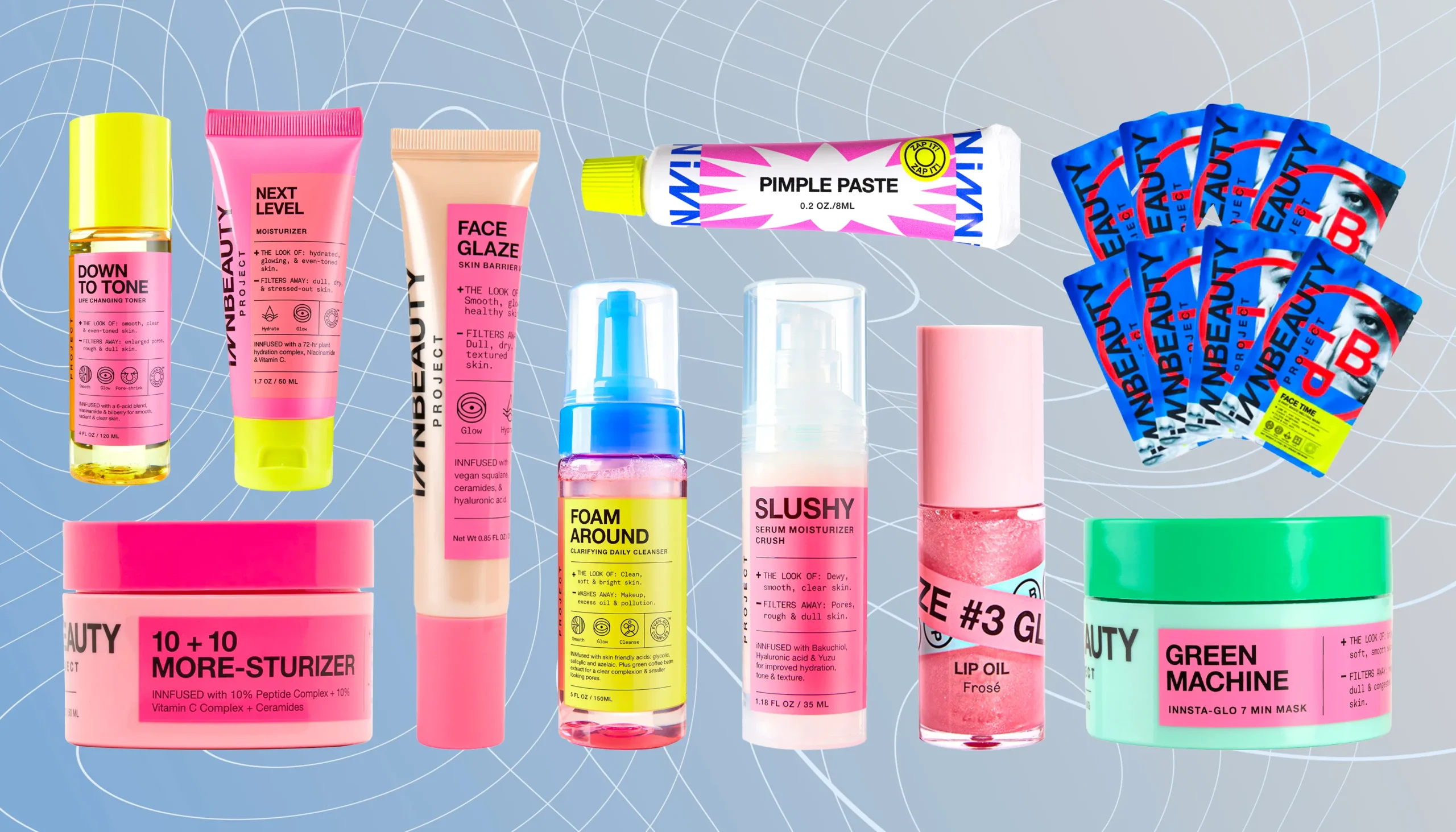
You’ve seen the bottles. They’re Insta-worthy, sitting pretty on a marble shelf. The names are fun: “Glaze Gloss,” “Green Machine,” “Puff Potion.” It’s the world of Inn Beauty Project, and it looks good.
But let’s be honest. We’ve all been tricked by pretty packaging before. You buy a product that looks amazing, but it does nothing for your skin. It just sits there, looking pretty.
So, what about Inn Beauty? Is it all just a beautiful facade? Or is there real science and results hiding behind those colourful labels and fruity names?
Also Read: Is the Rare Beauty Contour Stick the Ultimate Beginner-Friendly Sculpting Tool?
I was curious too. As someone who tries a lot of skincare, I decided to put their “fruit-powered” philosophy to the test. This isn’t just a quick first impression. We’re going to look at the ingredients, the feel, and the long-term results.
Let’s dig deeper and find out if these products are style over substance, or your next skincare holy grail.
First, What is the “Inn Beauty Project” All About?
Before we talk about formulas, let’s understand the brand’s heart.
Inn Beauty Project is a skincare brand that focuses on making products that are effective, fun, and easy to use. They believe skincare shouldn’t be a chore with 10 complicated steps.
Their big thing is using fruit extracts and oils. You’ll see ingredients like blueberry, acai, watermelon, and grape seed in almost every product. The idea is to harness the natural vitamins, antioxidants, and fatty acids that these fruits contain to feed your skin.
They also avoid what they call the “nasty stuff” – parabens, sulphates, and synthetic fragrances. Their products are also 100% vegan and cruelty-free.
So, the philosophy is great. But does it translate into a bottle that works?
Also Read: A Deep Dive into the REM Beauty Wicked Collection
The “Fruit-Powered” Promise: Marketing or Science?
This is the core question. When a brand says “fruit-powered,” what does that actually mean for your skin?
Let’s break down the key fruit ingredients they use and what science says they do:
- Blueberry & Acai Extract: These are superfruits, packed with antioxidants. Think of antioxidants as little bodyguards for your skin. They fight against “free radicals” – the nasty particles from pollution and UV rays that break down collagen and cause premature ageing. So, using these can help protect your skin and keep it looking youthful.
- Watermelon Seed Oil: This is a fantastic, lightweight oil. It’s rich in linoleic acid, which is great for soothing inflammation, hydrating the skin, and strengthening its natural barrier. It’s non-comedogenic, meaning it won’t clog your pores, making it brilliant for most skin types, even oily ones.
- Grape Seed Extract: Another antioxidant powerhouse. It’s particularly known for its anti-inflammatory properties and can help with skin elasticity.
The Verdict: The “fruit-powered” claim isn’t just a marketing gimmick. These ingredients have proven benefits. The real test, however, is how they are formulated and how they feel on your skin.
Putting the Products to the Test: A Deep Dive into the Bestsellers
I’ve been using several of their most popular products for weeks. Here’s the honest truth about what they’re like to use.
1. The Green Machine Moisturizer
This is one of their most famous products. It’s a green-tinted moisturiser that promises to hydrate and calm the skin.
- The Feel: It has a beautiful, lightweight gel-cream texture. It sinks into the skin almost instantly and doesn’t leave a greasy or sticky residue. This makes it perfect for wearing under makeup or for anyone who hates a heavy face cream.
- The Ingredients: The key players here are Matcha (for calming redness), Blueberry Extract (antioxidants), and Squalane (for hydration).
- Does It Work? For normal, combination, or oily skin, this is a brilliant daily moisturiser. It provides solid hydration without feeling heavy. I noticed my skin looked calmer and less red. If you have very dry skin, however, you might find you need something richer, especially in the winter. You can find it on Cult Beauty.
2. The Puff Potion Eye Cream
Eye creams can be hit or miss. This one comes in a rollerball applicator.
- The Feel: It’s a very lightweight, cooling gel. The metal rollerball feels amazing in the morning – it really helps to de-puff tired eyes.
- The Ingredients: It features Watermelon Seed Oil and Horse Chestnut Extract to help with circulation and puffiness.
- Does It Work? The instant cooling effect is fantastic and does temporarily reduce the look of morning puffiness. As a hydrating eye cream, it works well. However, if your main concern is deep wrinkles or dark circles, this might be a bit too light on its own. It’s best for those looking for hydration and a quick de-puffing fix.
3. The Glaze Gloss Lip Oil
This is a cult favourite for a reason.
- The Feel: It’s not sticky at all. It feels like a silky, hydrating treatment on the lips. It gives a high-shine, glossy finish that looks beautiful.
- The Ingredients: It’s packed with a blend of fruit oils like Raspberry, Blueberry, and Cranberry.
- Does It Work? Yes, absolutely. This is one of the best lip oils on the market. It genuinely hydrates your lips and makes them feel soft and smooth. The shine is gorgeous, and it tastes subtly of fruit. It’s a winner. You can often find it at Space NK.
Who Is Inn Beauty Project Really For?
This brand isn’t a one-size-fits-all solution, and that’s okay! It’s perfect for:
- Skincare Beginners: The routine is simple, and the products are gentle.
- People with Normal, Combination, or Oily Skin: The lightweight textures are ideal for these skin types.
- Anyone Who Hates Heavy, Greasy Products: If you want hydration without the thick feeling, you’ll love this.
- The “Skinimalism” Lover: If you believe in a less-is-more approach to skincare, this brand fits that philosophy perfectly.
It might not be for:
- People with Very Dry or Mature Skin: You might need richer, more intensive formulations than what Inn Beauty offers.
- Those Looking for Clinical-Strength Results: If you’re dealing with severe acne, deep wrinkles, or significant hyperpigmentation, you will likely need medical-grade ingredients (like retinoids or high-strength acids) that you won’t find here.
The Pros and Cons: A Simple Summary
Let’s break it down clearly.
The Pros (The Good Stuff)
- Lightweight, Pleasant Textures: The products feel incredible on the skin.
- Clean, Effective Ingredients: The formulas are well thought-out and avoid harsh chemicals.
- Great for Everyday Use: They slot perfectly into a simple, daily routine.
- Cruelty-Free and Vegan: A great choice for ethical shoppers.
- Beautiful Packaging: It does make your skincare routine feel more joyful.
The Cons (Things to Consider)
- Not Potent Enough for All Concerns: It may not be powerful enough for serious skin issues.
- Can Be Pricey for the Size: The bottles, while beautiful, aren’t always the biggest.
- The Scent: While derived from fruit, some products have a noticeable scent. If you are very sensitive to fragrance, even natural ones, this is something to be aware of.
The Final Verdict: Is It Worth Your Money?
So, after all that, does Inn Beauty’s fruit-powered formula actually work?
Yes, it does – but with clear boundaries.
The products are not magical potions that will erase ten years from your face. But that’s not what they are designed to do.
What they do deliver on is their promise of effective, enjoyable, and simple skincare. They provide excellent hydration, a dose of protective antioxidants, and a genuine sense of pleasure in your daily routine. The formulas are smart, and the fruit ingredients are doing meaningful work for your skin barrier and overall health.
If you are looking for a brand to build a gentle, effective, and feel-good skincare routine around, then Inn Beauty Project is absolutely worth the investment. It proves that you can have aesthetics and substance in one beautiful, fruit-powered bottle.
Frequently Asked Questions (FAQ)
1. What does “fruit-powered” actually mean in terms of scientific efficacy?
The term “fruit-powered” refers to the strategic use of fruit-derived bioactive compounds that have documented benefits for skin health. Unlike synthetic ingredients, these botanical extracts (like blueberry, acai, and watermelon) deliver a complex cocktail of antioxidants (such as polyphenols and flavonoids), vitamins, and essential fatty acids. For instance, the antioxidants combat free radical damage from UV exposure and pollution at a cellular level, while fatty acids in watermelon seed oil help reinforce the skin’s lipid barrier. The efficacy lies in this multi-faceted, nourishing approach rather than a single high-potency active.
2. How do the results from fruit enzymes compare to chemical exfoliants like glycolic or salicylic acid?
Fruit enzymes (like those from papaya or pineapple) and chemical exfoliants work differently. Enzymes are proteolytic, meaning they break down the keratin proteins that hold dead skin cells together, resulting in a very gentle, surface-level “digestion” of dull skin. Chemical exfoliants (AHAs/BHAs) work by dissolving the bonds between skin cells, penetrating deeper. Enzymes are ideal for sensitive skin or maintenance between chemical treatments, offering a softer, less irritating exfoliation but with less dramatic results for concerns like deep congestion or hyperpigmentation.
3. Can these fruit-based formulas provide enough antioxidant protection to replace a dedicated Vitamin C serum?
While Inn Beauty’s formulas provide a valuable baseline of antioxidant protection, they are not a direct replacement for a high-concentration, stabilized Vitamin C (L-ascorbic acid) serum. The antioxidant blend in their products offers broad-spectrum protection against environmental aggressors, which is excellent for daily maintenance. However, a dedicated Vitamin C serum is typically formulated for targeted efficacy: to boost collagen synthesis, brighten skin tone more aggressively, and provide a more potent, concentrated defense. Think of Inn Beauty as your daily antioxidant shield and a Vitamin C serum as your targeted treatment.
4. For someone with mature skin, are these lightweight formulas hydrating enough?
This depends on the specific needs of mature skin. While the formulas are excellent for delivering humectant and light emollient hydration, they may lack the occlusive, rich lipids needed to combat significant moisture loss and pronounced dryness common in more mature skin. A user with well-hydrated, “younger” mature skin might love the Green Machine, while someone with menopausal dryness might find it insufficient. Layering a richer cream over these products or using them as a hydrating serum step could be a more effective strategy.
5. How does the stability of these natural fruit extracts compare to lab-made synthetic ingredients?
This is a key consideration in “clean” beauty. Natural fruit extracts can be more vulnerable to oxidation and degradation from light and air exposure than their synthetic, stabilised counterparts. Reputable brands like Inn Beauty invest in packaging that mitigates this (opaque bottles, airless pumps) and use extraction methods that preserve potency. However, the shelf life of a product rich in fruit oils may still be shorter than a jar of petrolatum-based cream. Consumers should be mindful of using products within their recommended period after opening.
6. Is the brand’s avoidance of “synthetic fragrances” misleading since the products are fragrant from fruit oils?
This is an important distinction. While Inn Beauty avoids synthetic fragrances (like phthalates), the natural fruit extracts and essential oils they use impart a inherent scent. For some individuals with sensitivities, these natural aromatic compounds can still be triggers for irritation or allergic reactions, just as a synthetic fragrance might be. The brand is transparent about not adding separate fragrance, but the products are not fragrance-free. Those with extreme sensitivities should still scrutinise ingredient lists.
7. What is the environmental impact of sourcing these fruit ingredients at a commercial scale?
The sustainability of fruit-derived ingredients varies widely. Factors include water usage, farming practices (organic vs. conventional), and supply chain transparency. While using renewable resources is a positive, the “natural” label doesn’t automatically equate to “sustainable.” Conscious brands often partner with suppliers who practice regenerative agriculture. For the most accurate information, consumers should look for certifications (like Ecocert) or direct sustainability reports from the brand itself, as this is an area where transparency is still evolving.
8. How do the multi-tasking claims of products like the Puff Potion hold up under scrutiny?
The “multi-tasking” claim for a product like Puff Potion is partially valid but context-dependent. Its caffeine and horse chestnut extract can temporarily constrict blood vessels to reduce puffiness around the eyes, and its hydrating base can plump fine lines. However, calling it a “face primer” is more of a textural benefit—the smooth, silicone-free gel can create a nice base for makeup. It won’t, however, replace a dedicated, pore-filling primer for those with oily skin or large pores. Its multitasking is best within the realm of hydration and depuffing.
9. Are there any specific fruit ingredients in the line that are particularly innovative or unique?
The use of Watermelon Seed Oil is a standout. It’s a lightweight, non-comedogenic oil rich in linoleic acid, making it excellent for balancing both oily and dry skin by supporting a healthy skin barrier. It’s less common than argan or jojoba oil in mainstream skincare, offering a different fatty acid profile that is often better tolerated by acne-prone individuals. This demonstrates a thoughtful selection of fruit ingredients based on their specific functional benefits, not just their trendy names.
10. Could long-term use of these products lead to a tolerance, reducing their effectiveness?
Unlike ingredients like retinoids where the skin can acclimatise, you do not build a tolerance to antioxidants or hydrators. In fact, the benefits of consistent antioxidant use are cumulative, helping to prevent long-term photodamage. The “feel-good” factor might normalise, but the biochemical protection and hydration do not diminish with continued use. If the products seem less effective over time, it’s more likely that your skin’s needs have changed (due to season, age, or stress) rather than the product itself losing its potency.
