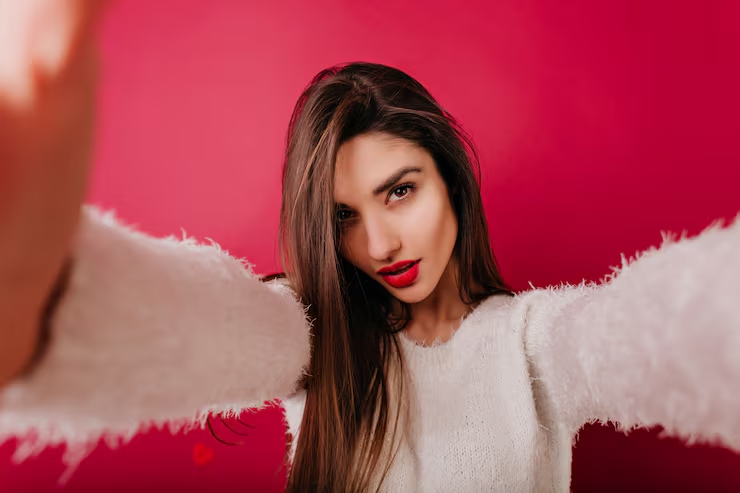
Have you been scrolling through TikTok, Instagram, or YouTube lately and felt like you’ve stepped into someone else’s bathroom? You’re watching a video where someone is doing their makeup, but the camera angle is strange. It’s like you’re looking out of their own eyes. You see their hands coming towards the lens with a makeup brush. You see the mirror reflection from their point of view. The caption says something like “POV: You’re doing your 5AM makeup before your 12-hour shift.”
If this feels familiar, you’ve just stumbled into the world of POV Beauty. It’s everywhere right now. But what does “POV” even mean here? Is it just a weird camera angle, or is it something more? And why has it become so incredibly popular so fast?
Also Read: Wild Rose Beauty: Your Guide to the Natural, Skin-Loving Power of Rosehip
Don’t worry if you’re confused. Today, we’re going to break it all down in the simplest way possible. We’ll look at what POV Beauty is, why it’s so addictive to watch, and what it tells us about the future of beauty online. Grab a cuppa, and let’s get into it.
First Things First: What Does “POV” Actually Mean?
Let’s clear up the jargon. POV stands for Point of View.
In films, a POV shot is when the camera becomes the eyes of a character. You see what they see. It makes you feel like you are that character.
On social media, and especially in beauty, “POV” has been adopted to create this same feeling. A POV Beauty video is designed to make you, the viewer, feel like you are the person doing the makeup. You’re not just watching an expert on a screen; you’re in their body, looking through their eyes as they do their skincare or apply their mascara.
It’s a shift from “Watch me” to “Be me.”
What Does a POV Beauty Video Look Like? (The Rules of the Game)
Spotting a POV beauty video is easy once you know the signs. Here’s the classic recipe:
- The Camera Angle: This is the biggest clue. The camera is placed where the person’s eyes would be. Often, it’s attached to their chest or held just below their face. You’ll see their chin or shoulders at the bottom of the frame, but you never see their full face from the front until maybe the big reveal at the end.
- The “Mirror” View: You frequently see the mirror’s reflection from their perspective. So you see a small, reflected version of their face in the centre of the screen, with their hands moving around it. It feels intimate, like you’re peeking into their private moment.
- The Hands are the Stars: Their hands, holding products and brushes, come in and out of the frame from below. You get a super close-up view of the application.
- The Sound: The audio is often the real, satisfying sounds of the routine. The click of a compact, the swoosh of a brush, the tap tap tap of a beauty sponge. No talking, just ASMR-style sounds. Or, there’s a trending song or a voiceover telling a story.
- The Caption & Story: This is the heart of it. The caption sets the scene and tells you who you are supposed to be in this POV. For example:
- “POV: You’re a bride doing your own wedding makeup.”
- “POV: You’re a mum stealing 5 minutes for yourself while the baby naps.”
- “POV: You’re getting ready for a first date you’re nervous about.”
You can see perfect examples by searching #POVBeauty on TikTok or Instagram.
Why Is It So Popular? The Psychology Behind the Trend
It’s not just a silly camera trick. POV Beauty is popular for some very clever, very human reasons.
- It’s Ultra-Relatable: Watching a perfectly lit, studio-quality tutorial can feel intimidating. It’s like watching a superhero. POV footage feels messy, real, and human. You see the shaky hands, the slight mess on the counter. It feels achievable.
- It Tells a Story: Humans love stories. A classic tutorial says, “Here’s how to do a smoky eye.” A POV video says, “You are a nurse finishing a night shift and needing to look alive for your date.” It wraps the makeup in emotion, drama, and identity. You’re not just learning a technique; you’re living a moment.
- It’s ASMR & Satisfying: The close-up sounds and visuals trigger a calming, almost hypnotic response in many people. The swoosh of a blush brush, the spritz of a setting spray—it’s satisfying brain candy.
- It’s a Break from Perfection: In an age of filters and Facetune, POV’s slightly janky, first-person view feels refreshingly authentic. It’s a counter-trend to the overly polished “instagrammable” life.
- It’s Great for Product Demonstration: Brands and creators love it because it shows products in action from the user’s perspective. You see exactly how a foundation blends or how a glitter looks when you’re holding it.
The Different “Types” of POV Beauty Videos
Not all POV beauty is the same. Here are the main categories taking over your feed:
- The “Get Ready With Me” (GRWM) POV: The most common. It’s a full, silent routine where you become the person getting ready for a specific event. “POV: You’re getting ready for your graduation.”
- The “Storytime” POV: A voiceover plays while the POV routine happens. The creator tells a funny, dramatic, or emotional story from their life. The makeup is just the visual side of the story. You can find creators who specialise in this all over YouTube.
- The “Satisfying” POV: Focused purely on the sounds and visuals of application. No story, just extreme close-ups of creamy products blending and powders puffing. Pure ASMR.
- The “Character” POV: You become a specific character. “POV: You’re a 90s supermodel doing your makeup backstage.” “POV: You’re a vampire ancient who still loves red lipstick.” This is where creativity goes wild.
How to Try Making Your Own POV Beauty Video
Fancy joining in? It’s easier than you think!
- Get a Setup: You don’t need fancy gear. Use your phone! A chest harness or a grip-tripod you can hold below your chin is perfect. You can find affordable ones on Amazon UK.
- Plan Your “Who”: Who is the person in this POV? Are you you? Or are you a character? Decide on the story.
- Set Your Scene: Your caption is key. Write it first! Something like “POV: You’re trying a new viral product you saw on TikTok.”
- Focus on Sounds: Turn up your phone’s microphone. Let the clicks, taps, and sprays be your audio.
- Keep it Real: Don’t worry about it being perfect. A little shake or a blurry moment adds to the realness.
- Edit Simply: Use the free editing tools in TikTok or CapCut. Just trim the start and end, maybe add a trending sound or a little text.
The Bigger Picture: What Does POV Beauty Mean for the Future?
POV Beauty isn’t just a passing fad. It’s a sign of how beauty content is changing.
- From Authority to Empathy: We’re moving away from the distant “guru” on a pedestal. We now want connection with people who feel like us.
- The Rise of “Ambient” Content: Not every video needs to be a direct lesson. Some content is just about sharing a vibe, a feeling, or a moment. POV is perfect for that.
- Storytelling is King: Products are becoming props in a larger narrative about our lives, moods, and identities. Brands will need to understand this.
Is There Anything Bad About the POV Trend?
Like any trend, it has its downsides.
- It Can Be Impractical: Actually learning a precise makeup technique from a jiggly, first-person view can be hard. It’s better for vibe and product shots than for detailed education.
- The “Story” Can Feel Forced: Not every 5-minute morning routine needs a dramatic Hollywood storyline. Sometimes it can feel a bit silly.
- It Still Isn’t Fully “Real”: Remember, these are still curated moments. The products are placed nicely, the lighting is often good. It’s a version of reality, not raw reality itself.
Your POV Beauty Starter Pack
Want to dive into the world of POV? Here’s where to start:
- To Watch: Go to TikTok or Instagram and search these hashtags: #POVBeauty, #GRWMPOV, #POVMakeup. You’ll fall down a wonderful rabbit hole.
- To Create: Grab your phone, a chest mount (or just hold it steady!), and your favourite moisturiser. Start with a simple premise: “POV: You’re doing your skincare on a Sunday evening.” See how it feels!
- To Learn: Watch this great video by creator Meredith Duxbury who often uses POV-style shots, showing how effective it can be for showing product application.
The Final Word: More Than Just a Camera Angle
POV Beauty is more than a trend about where to put your camera. It’s a fundamental shift in how we create and consume beauty content. It’s about intimacy, storytelling, and shared experience.
It asks us to step into someone else’s shoes (or makeup brushes) for a moment. In a world that can feel disconnected, that tiny moment of “being” someone else—a busy mum, a tired student, an excited bride—is a powerful thing.
So next time you see that familiar, slightly wobbly, first-person view pop up on your feed, you’ll know what’s happening. You’re not just watching a makeup video. You’re being invited into a story.
FAQ: POV Beauty Demystified
1. What exactly does “POV” mean in the context of beauty videos?
In beauty content, POV stands for “Point of View.” It specifically refers to a filming style where the camera acts as the eyes of the person performing the action. Instead of watching a creator face-on from a traditional “third-person” perspective, you see the routine from a first-person perspective. You see their hands coming into the frame to apply products, the mirror reflection from their angle, and the vanity as they see it. The goal is to create an immersive, “you are there” feeling, making the viewer feel like they are the one doing the makeup or skincare.
2. How is POV Beauty different from a traditional makeup tutorial?
The core difference is the relationship between the viewer and the creator. A traditional tutorial is instructional and demonstrative; an expert shows you how to do something, often with direct address (“Take your brush and blend here…”). POV Beauty is immersive and experiential. There is often no direct speaking. The focus shifts from teaching a precise technique to sharing a relatable moment, mood, or story. You’re not just learning how to apply contour; you’re experiencing the feeling of getting ready for a big job interview or a first date through the creator’s simulated eyes.
3. Why has this trend become so massively popular on TikTok and Instagram?
POV Beauty’s virality is driven by several key platform and cultural factors:
- Algorithm-Friendly: The short, engaging, story-based format is perfect for stopping the scroll. The “POV” caption hooks curiosity immediately.
- Relatability Over Expertise: It democratises beauty content. You don’t need a perfect studio or pro-level skills; you need a phone and a relatable story. This lowers the barrier to entry and makes content feel more authentic.
- ASMR & Sensory Appeal: The close-up sounds of product application (clicks, sprays, blends) tap into the popular ASMR trend, providing a satisfying sensory experience.
- Narrative-Driven Consumption: Modern audiences, especially Gen Z, crave storytelling. POV videos package beauty routines into mini-dramas or slices of life, making them more emotionally engaging than a straightforward demo.
4. Do I need special equipment to create POV beauty content?
While dedicated creators may use tools like chest mounts or jawline grips for stable hands-free filming, you can start with just your smartphone. The most common DIY method is to hold your phone at chin or chest level, pointing it roughly at your mirror. The slight shakiness can even add to the authentic, intimate feel. A small tripod with a flexible grip can also be positioned to achieve the angle. Fancy equipment can improve stability, but the essence of the trend—the first-person perspective—is accessible to anyone.
5. What are the most common types of POV Beauty video narratives?
POV Beauty narratives typically fall into a few compelling categories:
- The “Get Ready With Me” (GRWM): Simple, often silent routines for specific events (e.g., “POV: Getting ready for your wedding.”).
- The “A Day in the Life”: Showing a routine tied to a character’s lifestyle (e.g., “POV: You’re a ballet dancer doing your stage makeup.”).
- **The Emotional or Storytime POV: A voiceover narrates a personal, funny, or dramatic life story while the routine plays out visually.
- **The Satisfying/ASMR POV: Focus is purely on the textures, sounds, and visuals of the products, with minimal narrative.
- **The Fantasy/Character POV: The viewer becomes a fictional character (e.g., a vampire, a 60s starlet) doing their makeup.
6. Is POV Beauty an effective way to actually learn new makeup techniques?
POV Beauty is generally less effective for detailed technical learning than a traditional, clearly shot tutorial. The first-person view can obscure precision—you can’t always see exactly where on the eyelid a shade is being placed or the exact brush motion used. Its strength lies in product demonstration, routine inspiration, and mood. It’s excellent for seeing how a foundation blends from the user’s view or how a glitter looks in motion. For technique, it’s better for absorbing general vibe and order of operations than mastering a cut crease.
7. How does the “POV” trend relate to the larger shift towards “authenticity” in beauty?
POV Beauty is a direct product of the demand for authenticity. It rejects the hyper-polished, perfectly lit, filtered reality of earlier beauty guru culture. The shaky camera, the glimpse of a messy bedroom, the unedited sounds—all these elements are coded as “real.” It feels less like a performance and more like a peek into someone’s private world. This builds a stronger sense of parasocial connection and trust, as the audience feels they are seeing an unfiltered moment, even if it is still partially curated.
8. Can brands and businesses use POV content effectively?
Absolutely, and many already are. For brands, POV is a powerful product marketing tool. It showcases products from the exact perspective of the customer using them. A POV video of someone applying a serum or a blush allows potential buyers to visualise themselves using it more effectively than a standard advert. It feels less like an advertisement and more like authentic user-generated content (UGC). Brands can collaborate with creators to make POV content or create their own that mimics the personal, immersive style.
9. What’s the potential downside or criticism of the POV Beauty trend?
Criticisms of the trend include:
- Staged Authenticity: While it feels real, it’s still a curated performance. The “relatable” story is often a carefully chosen narrative.
- Impracticality for Learning: As mentioned, it’s not ideal for education, potentially prioritising aesthetic and vibe over utility.
- Over-Saturation & Formulaic Content: As with any viral trend, it can become repetitive, with creators forcing POV formats onto content where it doesn’t add value just to chase the algorithm.
10. Is POV Beauty just a passing fad, or is it here to stay?
While the specific hashtag may peak, the core principles behind POV Beauty are likely enduring. The shift towards first-person, immersive, narrative-driven, and “authentic”-feeling content is a major evolution in digital media. Even if the label changes, the desire for relatable, story-based connection between creator and audience will remain. We can expect the techniques and ethos of POV—intimacy, empathy, and shared experience—to continue influencing how beauty and lifestyle content is made across platforms.
