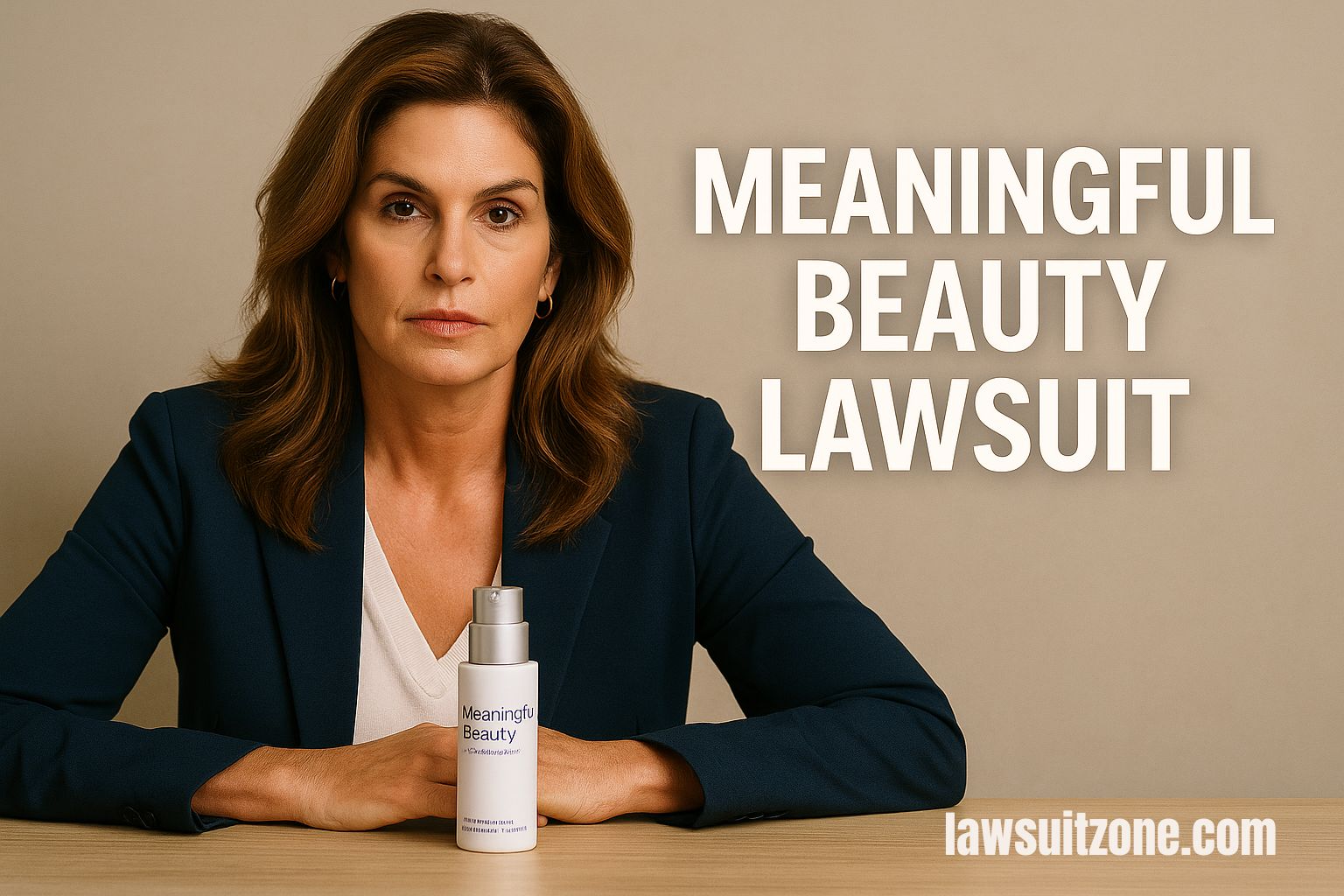
You might have seen a headline recently that made you pause. Maybe you were scrolling through your phone, or you caught a mention on a morning show. The words “Meaningful Beauty” and “lawsuit” together in the same sentence.
If you’re a customer who uses Cindy Crawford’s famous anti-ageing skincare line, or even if you’re just someone interested in the beauty world, your first thought was probably: “Wait, what happened? Is the product safe? Should I stop using it?”
It’s confusing, worrying, and the news articles can be full of legal jargon that makes your head spin. You deserve a clear, straightforward explanation of what’s actually going on, without the scare tactics or the complicated language.
Also Read: How to Use the Huda Beauty Color Corrector Like a Pro
That’s exactly what this guide is for. We’re going to walk through this story step-by-step. We’ll look at what the lawsuit claims, what the company says in response, and what it really means for you and the products on your bathroom shelf. Consider this your calm, collected friend breaking down the complicated news.
Let’s get into it.
First Things First: What is Meaningful Beauty?
Before we talk about lawsuits, let’s be clear about the product at the heart of this. Meaningful Beauty is a skincare brand created by supermodel Cindy Crawford and renowned French plastic surgeon Dr. Jean-Louis Sebagh. It launched back in 2005.
The brand’s star ingredient is something called “Super Oxidant Defense Complex” or “Melon Leaf Extract.” The idea is that this special melon extract, sourced from the South of France, is packed with antioxidants that fight the skin-damaging molecules known as free radicals. The line promises to reduce the signs of ageing, like fine lines and wrinkles, and give you more youthful-looking skin.
For nearly 20 years, it’s been sold directly to consumers, often through TV infomercials and its own website. It built a huge, loyal customer base who trusted Cindy Crawford’s iconic image and the science behind the products.
The Headline: What is the Lawsuit Actually About?
In early 2024, a class-action lawsuit was filed in the United States against Guthy-Renker, the company that owns and sells Meaningful Beauty. The lawsuit makes one central claim, which we can break down simply:
The lawsuit alleges that Meaningful Beauty’s key products do not contain the special, rare “French melon extract” (Cucumis Melo) that the advertising has always focused on.
Instead, the lawsuit claims, the products contain a much more common and less expensive form of melon extract. The legal argument is that this makes the advertising and labelling “false and misleading.” In essence, the lawsuit is saying: “You promised customers a Rolls-Royce ingredient, but you gave them a basic family car ingredient and charged them the Rolls-Royce price.”
It’s important to understand what the lawsuit is NOT about:
- It is NOT a lawsuit about the products being unsafe or causing harm.
- It is NOT a recall of any products.
- It is NOT about the products not working at all.
The core issue is about ingredient transparency and marketing claims.
Breaking Down the Key Terms: “Cucumis Melo” vs. “Super Oxidant Defense Complex”
This is where it gets a bit scientific, but stick with me.
- Cucumis Melo: This is the full, Latin botanical name for the melon. The lawsuit states that for years, Meaningful Beauty specifically advertised that its star complex was made from a rare Cucumis Melo cantaloupe melon grown in the South of France.
- Super Oxidant Defense Complex (SOD): This is the branded name Meaningful Beauty gives to its special blend. The lawsuit claims that recent laboratory testing showed the products contained a different, more common melon extract and not the specific Cucumis Melo extract that was promised.
The heart of the legal argument is a question of “materiality.” This is a fancy legal word that just means: “Was this information important enough to influence a customer’s decision to buy?” The people behind the lawsuit argue that yes, the specific origin and type of melon extract was a central, material reason people paid a premium for these products.
What Has Meaningful Beauty Said in Response?
Guthy-Renker, the parent company, has strongly denied the allegations. In official statements, they have said the lawsuit is “without merit” and that they plan to “vigorously defend” themselves.
While they haven’t provided detailed point-by-point rebuttals in the press, their general defence would logically be based on a few points:
- That their “Super Oxidant Defense Complex” is a proprietary blend, and they have always used a high-quality, effective melon extract.
- That their clinical testing and customer results speak for the efficacy of their products.
- That the lawsuit’s interpretation of the ingredients or testing methodology is flawed.
You can read the company’s official stance on their Meaningful Beauty website, though they do not directly address the lawsuit on their main shop pages.
The “Class-Action” Part: What Does That Mean For Customers?
You might be wondering, “I bought these creams, does this affect me?”
A class-action lawsuit is when one or a few people sue a company on behalf of a larger “class” of people who have all had the same alleged problem. In this case, the “class” could be defined as all customers in the United States who purchased certain Meaningful Beauty products within a specific timeframe.
What could happen if the lawsuit succeeds?
The lawsuit is asking for several things, including:
- Money back (reimbursement) for people who bought the products.
- A change in the advertising and labelling to be accurate.
- Covering the legal fees.
It is crucial to know: As of right now, this lawsuit is only in its early stages in a US court. No judge has made a final ruling. No settlement has been reached. Nothing has been proven in court. This process could take months or even years.
Your Practical Questions Answered
Let’s tackle the questions you’re likely asking yourself right now.
1. Are the Meaningful Beauty products dangerous? Should I throw them out?
Based on the allegations in the lawsuit, there is no claim that the products are unsafe or dangerous. The lawsuit is about marketing, not about health risks. There has been no safety recall issued by any health authority, like the FDA in the US or trading standards in the UK. From a safety perspective, there is no current directive to stop using them.
2. Do the products still work?
This is the million-dollar question. The lawsuit challenges whether the specific advertised ingredient is present, not whether the creams and serums provide any benefit at all.
The products contain many other ingredients—hyaluronic acid, peptides, vitamins—that are well-known in skincare for providing hydration and improving the look of skin. Many long-term customers swear by the results they see. The legal question is whether the key, differentiating ingredient (the special French melon) is what was promised.
3. I’m in the UK/EU. Does this affect me?
The lawsuit was filed in a United States court. Legally, its direct rulings would only apply to customers within the US jurisdiction. However, the products sold in the UK and EU are fundamentally the same. The questions raised about ingredient sourcing and transparency are relevant globally, even if the legal action itself is not.
UK consumers are protected by strong consumer rights laws, like the Consumer Rights Act 2015, which state that products must be “as described.” If you feel a product was mis-sold, you have the right to seek a refund from the retailer.
4. Where can I get unbiased information?
It’s wise to look at official, non-commercial sources:
- The Court Documents: For the most factual, dry details, you can look up the case. It was filed in the U.S. District Court for the Central District of California. Searching for “Meaningful Beauty class action” on a legal database will bring it up.
- Consumer Protection Agencies: In the UK, the Competition and Markets Authority (CMA) oversees that advertisements are not misleading.
5. What should I do if I’m a customer?
Right now, you don’t need to do anything drastic, but you can be a smart consumer:
- Don’t Panic: Remember, no ruling has been made.
- Assess Your Satisfaction: Think about your own experience. Have you been happy with the results? Does the value match the price for you?
- Keep an Eye Out: If you are a US customer, you might eventually receive an email or letter if a settlement is reached and you are eligible for compensation. This could be many months away.
- Know Your Rights: If you are in the UK and feel you were misled, you can contact Meaningful Beauty customer service directly or seek advice from Citizens Advice.
The Bigger Picture: What This Tells Us About the Beauty Industry
This situation isn’t just about one brand. It highlights important topics we should all be aware of as beauty buyers:
- “Clinical Results” vs. “Celebrity Endorsement”: We often buy because we trust a famous face. This is a reminder to look at the science behind the claims, not just the spokesperson.
- The Power of “Proprietary Blends”: Brands often use terms like “patented complex” or “secret blend.” This can protect their recipe, but it can also make it hard for consumers to know exactly what’s inside and in what amount. Transparency is key.
- Ingredient Sourcing Stories: Many brands build a narrative around a rare, exotic ingredient. This lawsuit asks how much that story matters and whether it must be literally true.
What Happens Next?
The legal process is slow. Next steps will likely involve:
- Discovery: Both sides share evidence, documents, and expert reports.
- Potential Settlement: The company may choose to settle the case out of court to avoid a long, expensive trial and negative publicity.
- Or, a Trial: If no settlement is reached, a judge or jury will eventually hear the case and make a ruling.
We will only know the true outcome when this process concludes.
The Bottom Line for You
So, what’s the final takeaway?
The Meaningful Beauty lawsuit is a serious legal challenge about truth in advertising. It questions whether the brand’s core marketing message matches the physical ingredients inside the bottle.
For you, the customer, this means:
- Your products are not deemed unsafe.
- You can continue to use them if you are happy with them.
- You should stay informed as the case develops.
- It’s a good reminder for all of us to be curious, ask questions, and understand what we’re really buying.
The world of beauty is built on both science and stories. This case reminds us that both need to be authentic.
FAQ: The Meaningful Beauty Lawsuit Explained
1. Is the lawsuit about the Meaningful Beauty products being dangerous or causing harm?
No, this is a critical distinction. The class-action lawsuit is not alleging that the products are unsafe, toxic, or cause physical harm. There has been no product recall by health authorities like the FDA. The core allegation is about marketing and labelling accuracy. The plaintiffs claim the products do not contain the specific, rare “French melon extract” (Cucumis Melo) that was a central selling point for nearly two decades, and instead contain a more common melon extract. It’s a case about whether customers got what they paid for, not about safety.
2. Does this mean the products don’t work at all?
The lawsuit does not claim the products are completely ineffective. It challenges the presence of one specific, advertised ingredient, not the entire formulation. Meaningful Beauty products contain many other established skincare ingredients like hyaluronic acid, peptides, and vitamins, which are known to provide hydration and improve skin’s appearance. The legal question is whether the “hero ingredient” that justified the brand’s premium price and unique story was materially misrepresented, which could be considered deceptive even if the final cream provides some moisturizing benefit.
3. I live outside the United States (e.g., in the UK, EU, Canada). Does this affect me?
The lawsuit was filed in a U.S. court, so any direct monetary settlement or court order would initially apply only to the defined “class,” likely U.S. residents who made purchases within a specific period. However, the fundamental issue is global. The products sold internationally are identical, and the questions about ingredient integrity and transparent marketing are relevant to all consumers. Customers worldwide can use this information to reassess their trust in the brand’s claims, and they remain protected by their own local consumer protection laws (like the UK’s Consumer Rights Act 2015).
4. What is a “class-action” lawsuit, and what could customers actually get from it?
A class-action allows one or a few people (the “named plaintiffs”) to sue on behalf of a larger group (“the class”) who suffered the same alleged harm. If the plaintiffs win or the case settles, potential outcomes include:
- Refunds: Partial reimbursements for purchasers.
- Injunctive Relief: A court order requiring the company to change its advertising and labelling.
- Legal Fees: Payment of the plaintiffs’ attorney costs.
It’s crucial to understand this process takes years. Customers should not expect an immediate cheque. If a settlement is reached, eligible consumers would be notified through official channels on how to file a claim.
5. What has Meaningful Beauty (Guthy-Renker) said in their defense?
The company, Guthy-Renker, has issued statements calling the lawsuit “without merit” and has vowed to “vigorously defend” itself. While they have not provided granular public rebuttals, their defense would logically assert that their proprietary “Super Oxidant Defense Complex” is a high-quality, effective ingredient blend, that their clinical testing supports their efficacy claims, and that the lawsuit misinterprets their ingredient sourcing or testing methodology. The case hinges on whose scientific analysis and interpretation of “Cucumis Melo” the court finds credible.
6. Should I stop using my Meaningful Beauty products immediately?
From a safety standpoint, there is no official directive to stop usage. However, your decision can be personal and financial. Consider:
- Your Satisfaction: Are you happy with the results you’re getting for the price?
- Your Trust: Has the lawsuit damaged your confidence in the brand’s transparency?
- Your Budget: You may decide to pause purchasing new items until the case is resolved.
Many users may continue using their existing products while deciding whether to repurchase, as discontinuing use of a moisturizer or serum is unlikely to cause harm.
7. Where can I find the actual legal documents to read for myself?
The lawsuit is a matter of public record. You can search for it on legal database websites like PACER (U.S. Federal Court Records) or CourtListener. The case name is Lee et al. v. Guthy-Renker LLC, filed in the U.S. District Court for the Central District of California. Searching this full case name in a search engine alongside “class action complaint” will often lead to articles or legal sites that host a copy of the filing. Reading the complaint itself provides the plaintiffs’ detailed allegations.
8. How does this relate to Cindy Crawford’s involvement?
Cindy Crawford is the celebrity founder and the public face of Meaningful Beauty. The lawsuit, however, is filed against the parent company, Guthy-Renker LLC, which manufactures, markets, and sells the products. While Crawford’s endorsement is integral to the brand’s image and marketing, she is not named as a defendant in this suit. The legal responsibility for product formulation and advertising claims typically falls on the corporate entity, not the celebrity spokesperson, unless they were directly involved in the alleged deception.
9. What are the broader implications of this lawsuit for the beauty industry?
This case is a significant flashpoint in ongoing scrutiny of “clean,” “clinical,” and “celebrity” beauty brands. It highlights key industry issues:
- “Proprietary Blend” Transparency: The case challenges how brands use secretive, trademarked ingredient names that can obscure what’s actually inside.
- The “Story” vs. The Substance: It questions the value and truthfulness of exotic ingredient origin stories used to justify premium pricing.
- Consumer Skepticism: It may encourage consumers to be more critical of marketing claims and to demand greater transparency from all brands, potentially leading to stricter industry standards.
10. As a customer, what are my concrete next steps?
- Do Not Panic: Understand the nature of the allegations.
- Monitor Official Channels: If you are a U.S. customer, keep an eye on your email and physical mail for any future settlement notices. You can also check the website of the law firm representing the plaintiffs for updates.
- Exercise Your Consumer Rights: If you feel misled, you can contact Meaningful Beauty’s customer service to express your concerns and request a refund based on your local consumer laws (e.g., the product not being “as described”).
- Stay Informed: Follow reputable news outlets for updates on the case’s progression, which will be slow but important.
