There’s a very specific kind of moment in corporate life that never feels fully “normal,” no matter how many times you experience it.
It’s the calendar invite that pops up with a slightly mysterious title—“Farewell,” “Goodbye & Good Luck,” or the classic “Last Day Catch-up.” It’s the quiet office chatter that starts a week before: “Did you hear? They’re leaving.” It’s that mix of happiness for someone’s new chapter… and the sudden, unexpected heaviness you feel because your everyday is about to change.
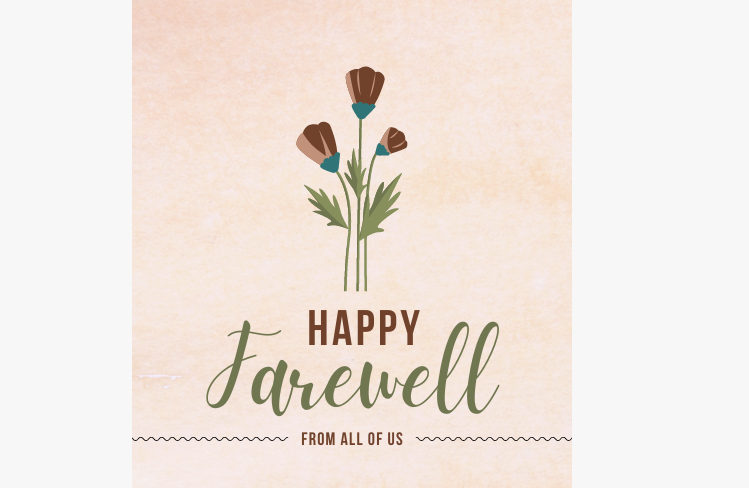
And somewhere in the middle of that, there’s always one thing that becomes the emotional anchor of the goodbye: a farewell card.
Not the “formality” kind. Not the quick “all the best” kind. The kind that makes someone pause for a second. The kind that makes them smile on a hard day. The kind they take a photo of. The kind they open again months later, when they miss the people they used to work with.
A farewell card isn’t just paper (or a screen). It’s proof that this person mattered here.
Why a farewell card hits differently in corporate life
Corporate goodbyes can be weird. Sometimes you’re genuinely close to your colleagues—late-night launches, stressful deadlines, shared jokes, tiny wins that only your team would understand. And sometimes you’re not “close” in a personal way, but you still shared a rhythm: daily standups, quick pings, coffee breaks, small team rituals that quietly became part of your life.
So when someone leaves, it’s not just their job that changes. It’s the shape of your week. The energy in your meetings. The person who always said “let’s keep it simple.” The one who made Mondays feel lighter.
And here’s the thing: people don’t always know how to say goodbye properly at work.
They want to, but they don’t know what to write. They don’t want to sound cheesy. They don’t want to sound too formal. They don’t want to write something generic that feels like copy-paste. And sometimes, they’re so busy that they miss the chance until the last day is already here.
That’s where a farewell card becomes quietly powerful—because it gives everyone a simple way to show up emotionally, even in a busy environment. It creates a moment where people can say what they usually don’t say out loud.
The real reason people keep farewell cards
Let’s be honest: when people leave a job, they don’t keep every Slack message. They don’t keep every “good job” comment. They don’t keep every meeting note.
But they keep words that feel personal.
A good farewell card becomes a little time capsule of a version of their life that mattered. It reminds them of:
- who they were in that team,
- what they contributed,
- what people appreciated about them,
- and the relationships that were real, not just professional.
Even if they’re leaving because they’re exhausted. Even if it wasn’t the perfect company. Even if they’re relieved to go.
A farewell card is like a soft landing.
What makes a farewell card actually meaningful (and not just “good luck”)
If you’ve ever stared at a blank message box thinking, “What do I even write?”—you’re not alone.
The secret is simple: the most memorable farewell messages are specific. They don’t try to sound impressive. They try to sound true.
Instead of:
“All the best for your future.”
Try:
“I still remember how calmly you handled that client escalation—your composure made the whole team feel steady.”
Instead of:
“It was nice working with you.”
Try:
“Your feedback on my first project genuinely improved my confidence. I won’t forget that.”
Instead of:
“Good luck.”
Try:
“The next team is lucky—your work ethic is rare, but your kindness is even rarer.”
Think of it this way: a farewell card is not a performance. It’s a small human moment. And corporate life needs more of those.
Easy message formulas that never fail
Here are a few conversational, “real-sounding” templates you can use (and customize in seconds):
1) The Appreciation + Impact
“I really appreciated the way you [specific thing]. It made a big difference for me/the team. I’m going to miss working with you.”
2) The Memory
“My favorite memory with you is [moment]. It still makes me smile. Wishing you a future that feels exciting and light.”
3) The Compliment That’s Not Generic
“You have this rare mix of [quality 1] and [quality 2]. It made working with you feel easy. Please stay in touch.”
4) The Warm Professional
“Thank you for being such a reliable teammate. I learned a lot from you, and I’m genuinely rooting for you.”
5) The Funny One (if that’s your vibe)
“I still don’t know how you survived [project/season/tool], but I respect it. Don’t forget us when you become famous.”
You don’t need to write a paragraph. Two honest lines beat ten generic ones.
When you’re not close to the person (but still want to be kind)
This is super common in corporate environments—maybe you worked with them occasionally, or only saw them in meetings, or they were in another department. You still want to sign the farewell card, but you don’t want it to feel fake.
Here’s what works:
- Mention professionalism and energy:
“I always appreciated how organized and thoughtful you were in meetings. Wishing you the best for what’s next.” - Mention a general positive trait:
“You brought a great calm energy to the team. Good luck—you’ll do amazing.” - Keep it simple but warm:
“Wishing you success and happiness in your next chapter. It was a pleasure working with you.”
That’s it. You don’t have to force closeness. Just be respectful and real.
The “group farewell card” problem (and how to make it easier)
Now, let’s talk about the most corporate challenge of all:
You want everyone to sign, but:
- people are in different time zones,
- someone is always on leave,
- the office is hybrid,
- the farewell is suddenly tomorrow,
- and half the team says, “I’ll write later” and forgets.
This is why digital farewell cards have become such a lifesaver—because instead of chasing people, you can just share one link and let everyone add their message when they have a minute.
A team farewell card should feel like a group hug, not a project management task.
That’s also why platforms like Sendwishonline.com are used for workplace goodbyes: they keep everything in one place, make group signing simple, and turn a rushed goodbye into something more complete and thoughtful.
How to make a farewell card feel like an experience (not just a card)
If you want the person leaving to feel genuinely celebrated, you can make the farewell card feel like a mini-event without making it dramatic.
Here are a few ideas that people actually love:
1) Add a “Best Moments” section
Ask everyone to share one favorite memory or “classic you” moment.
2) Add a “What we learned from you” line
It makes the card feel deeper and surprisingly emotional.
3) Add inside jokes (sparingly)
One or two is sweet. Twenty becomes confusing.
4) Add a mini “wish list” for their future
Not “good luck” — but something like:
“More peace. Better work-life balance. A manager who appreciates you. And a salary jump you deserve.”
5) Make it feel personal, not perfect
It doesn’t need to sound poetic. It needs to sound like people who actually know them wrote it.
The part nobody says out loud: farewell cards help the people staying, too
This might sound surprising, but a farewell card isn’t only for the person leaving.
It helps the rest of the team process the change.
It gives closure. It turns awkward silence into shared warmth. It lets people say the things they didn’t say during busy weeks. It reminds everyone that work is not just tasks—it’s people.
And sometimes, writing a farewell message is how you realize:
“Wow, I really did value them.”
Corporate life can be fast, transactional, and exhausting. A farewell card is one of the few rituals that brings the human part back.
It’s a soft reminder that even if work changes, relationships still matter.
FAQs about Farewell Cards
1) What should I write in a farewell card if I don’t know the person well?
Keep it warm and professional. Mention something general but positive (their attitude, professionalism, or teamwork) and wish them well. Two honest lines are enough.
2) Should a farewell card be funny or emotional?
It depends on the relationship and the person’s vibe. If they’re known for humor, a light message works. If the moment feels emotional, a sincere note is better. When in doubt: warm + simple.
3) How long should a message in a farewell card be?
Anywhere from 1 to 4 lines is perfect. Specific beats are long. A short message that feels real is more memorable than a long generic paragraph.
4) Is it okay to mention future networking in a farewell card?
Yes—just keep it natural. Something like “Let’s stay in touch” or “Hope our paths cross again” is completely appropriate.
5) When should you give the farewell card—before the last day or on the last day?
Ideally, give it on their last day (or the last team meetup before they leave). If logistics are tricky, earlier is better than late.
6) How do you manage a group farewell card for a remote or hybrid team?
Use a digital format so everyone can add messages from anywhere. Share it early, set a gentle deadline, and send one reminder—then you’re not chasing people at the last minute.
In the end, a farewell card is such a small thing—but it carries an outsized kind of meaning. Corporate life moves fast, people switch teams, cities, and titles, and goodbyes often get squeezed between meetings and deadlines. A thoughtful card slows time down for a moment and says what work usually doesn’t: you mattered here, and you’ll be missed. Whether it’s a few sincere lines, a shared memory, or a simple “stay in touch,” it becomes a soft bridge between what was and what’s next—something the person leaving can carry with them long after the last laptop shuts and the last goodbye is said.
